

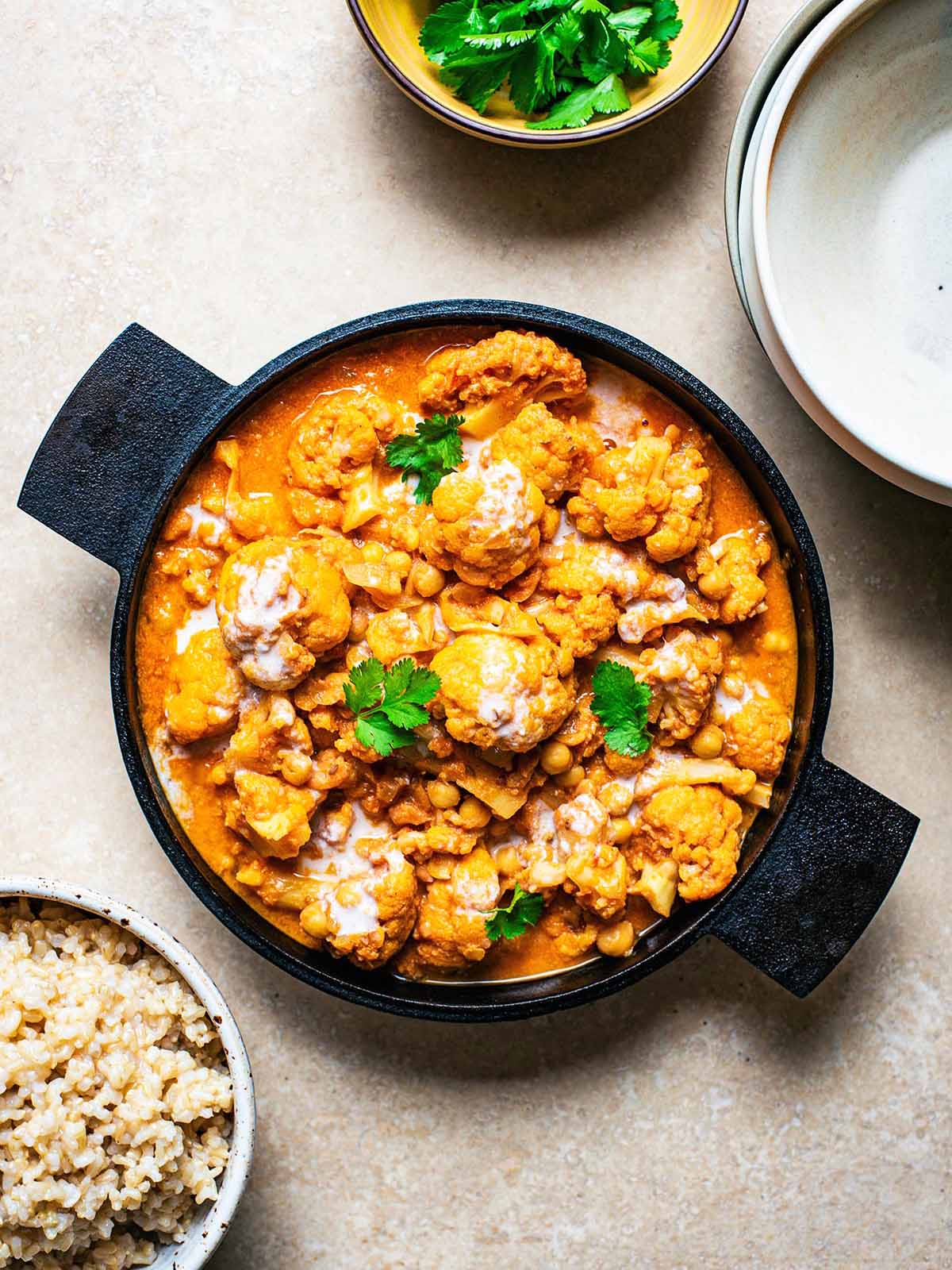
An Easy Vegetarian Tikka Masala

Tikka masala is one of the UK’s most popular dishes, both for cooking at home and takeout. No one’s quite sure where it comes from and there are a pile of explanations, but it’s definitely not an ancient dish. Usually made with chicken, it’s a spicy (masala, obviously) curry-style gravy and it’s excellent vegan, too.
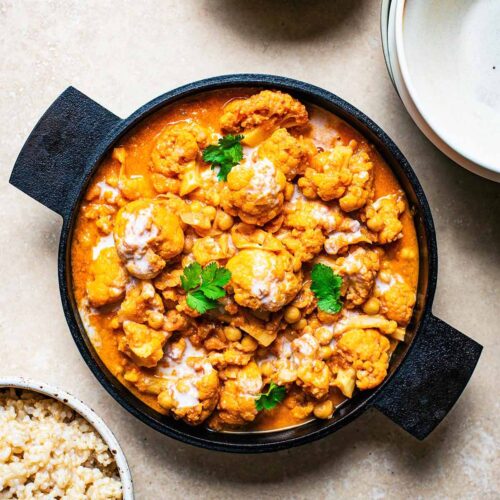
Cauliflower tikka masala is an obvious riff on the classic chicken recipe, because cauliflower is the do-all vegetable. It’s good in everything and 100% the plant based version of chicken for when you’re not sure what to have for dinner. It also has a surprisingly long season, with different varieties growing well into winter, though it’s generally best in spring and early autumn depending on where you live.
This is ready in under an hour from start to finish and makes a great light dinner with or without rice or naan. All the spices make for excellent flavour without a long cooking time.

I first shared this recipe in 2020. It’s been updated with improvements to the recipe instructions and a retested and improved recipe, new photos, including step-by-step photos, and more helpful information.
I don’t use affiliate links. Any links you see here are to other recipes or related information, not paid links.
Ingredients You’ll Need and Why
Apart from the cauliflower, which can be from frozen, these are all shelf stable or long lasting ingredients. These are my notes from recipe testing and you can find the full recipe card with complete measurements and instructions below.
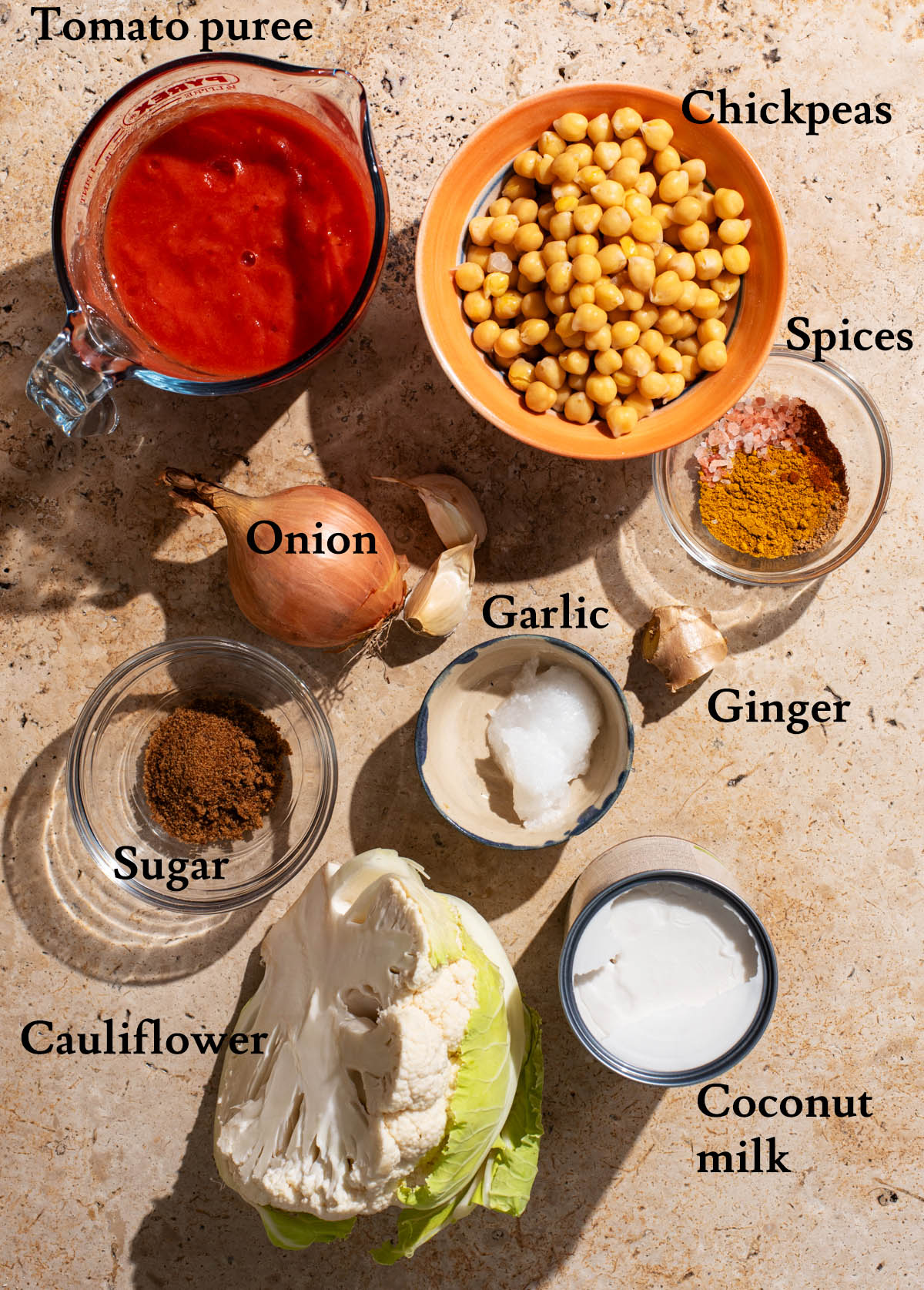
- Garam masala: if you don’t have garam masala, you can use the following blend: ½ teaspoon each cardamom, cinnamon, cloves, and coriander. Since the other usual additions to a garam masala are included in the recipe anyway, you don’t need to add extra but you can up the cumin and cayenne slightly if you like.
- Cauliflower: to use frozen cauliflower florets, add it at the same time, right from frozen, and follow the recipe as instructed with no change to the cooking time.
- Tomato puree: not to be confused with tomato paste or tomato sauce. This is crushed tomatoes or passata, simply tomatoes that have been blended and jarred or canned. It should have no added ingredients other than tomatoes and perhaps salt.
- Coconut milk: this should be full-fat canned coconut milk. If you’re not averse to dairy, you can sub heavy cream for the coconut milk and use butter in place of the oil. I haven’t tested this but it should be fine.
- Sugar: a pinch of sugar rounds out the flavours and helps to neutralise any excess acidity from the tomatoes. This can be white, cane, brown, muscovado, date, or coconut sugar.Use honey if preferred.
- Add-ins: beyond the spices, it’s a very minimal recipe and there’s not a substitute for cauliflower but you could add more vegetables! Green peas are great added right at the end of cooking time, and so are any fresh hardy greens like spinach and chard. You can add sweet potato, but then you’re heading more toward a cauliflower sweet potato curry.
How to Make Cauliflower Tikka
The method is very simple, but it is best to use a heavy pot with a tight-fitting lid so that the cauliflower can steam without the liquid escaping, as it is steamed rather than boiled in the gravy. Use a cast iron pot or Dutch oven if you have one.
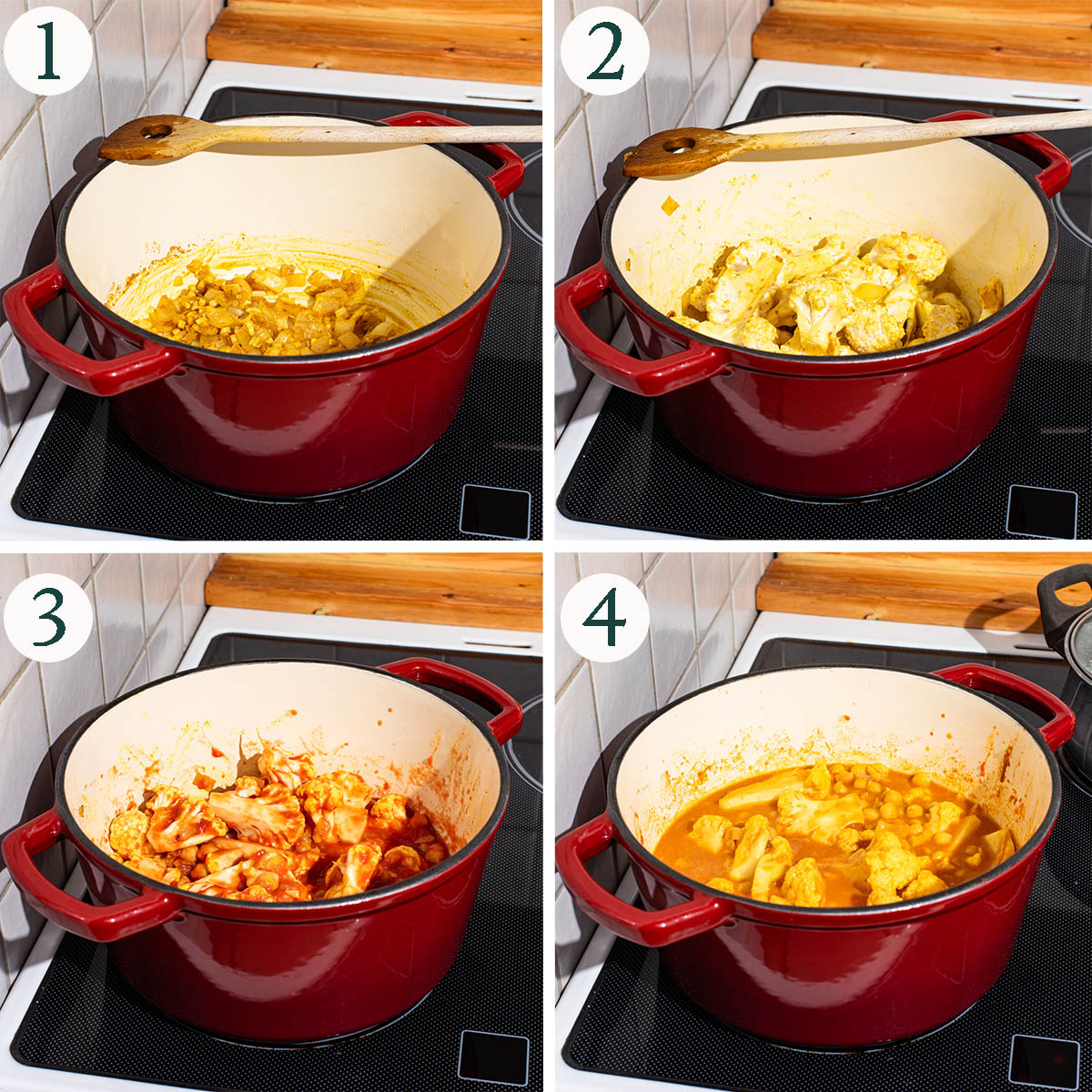
Step 1: fry the onions, garlic, and ginger for about eight minutes on low heat. The onion should be softened and translucent before continuing. If it’s sticking to the bottom of the pot, reduce the heat and optionally add a splash of water to help it release. Add the spices and cook for a few seconds to help release their oils.
Step 2: stir the cauliflower to coat in the spices and cook for a couple minutes. You won’t see any browning on the cauliflower and this step isn’t to cook the cauliflower fully. A brief sauté without extra liquid in the pot now helps the cauliflower cook more quickly once the tomatoes are added.
Step 3: add the crushed tomatoes and chickpeas and cook until the cauliflower is tender. The pot should be tightly covered to steam the cauliflower during this step, and too much steam escaping will lead to under-cooking or uneven cooking of the cauliflower.
Step 4: make sure the cauliflower is fork-soft, then stir in the coconut milk and season to taste before serving. The coconut milk is added at the end to avoid potential splitting, which happens with some brands of coconut milk when heated too much.
Expert Tips for the Best Curry
- Don’t skip the sweetener: sugar or honey are important to add to this recipe – usually I’d use less than a full teaspoon for other recipes, but there is quite a bit of sweetness in a tikka masala. It is key so please don’t leave it out. You can use cane sugar or maple syrup or whatever you prefer, just add a sweetener.
- Use full-fat milk: it won’t taste the same with low-fat coconut milk, and you’ll get a thin, runny texture if you use a reduced-fat alternative. Try to find a brand with at least 60% coconut. The recipe calls for only the cream from a can of coconut milk. If you find you need to thin the curry a bit, you can use the water from the coconut milk instead of tap water.
- Adjust the spice level: tikka masala is meant to be a spicy dish. I’ve toned it down a bit here with a half teaspoon of cayenne pepper, but your garam masala probably includes some kind of hot pepper too. Reduce the cayenne if you have a hard time with spice, or increase it if you love it.
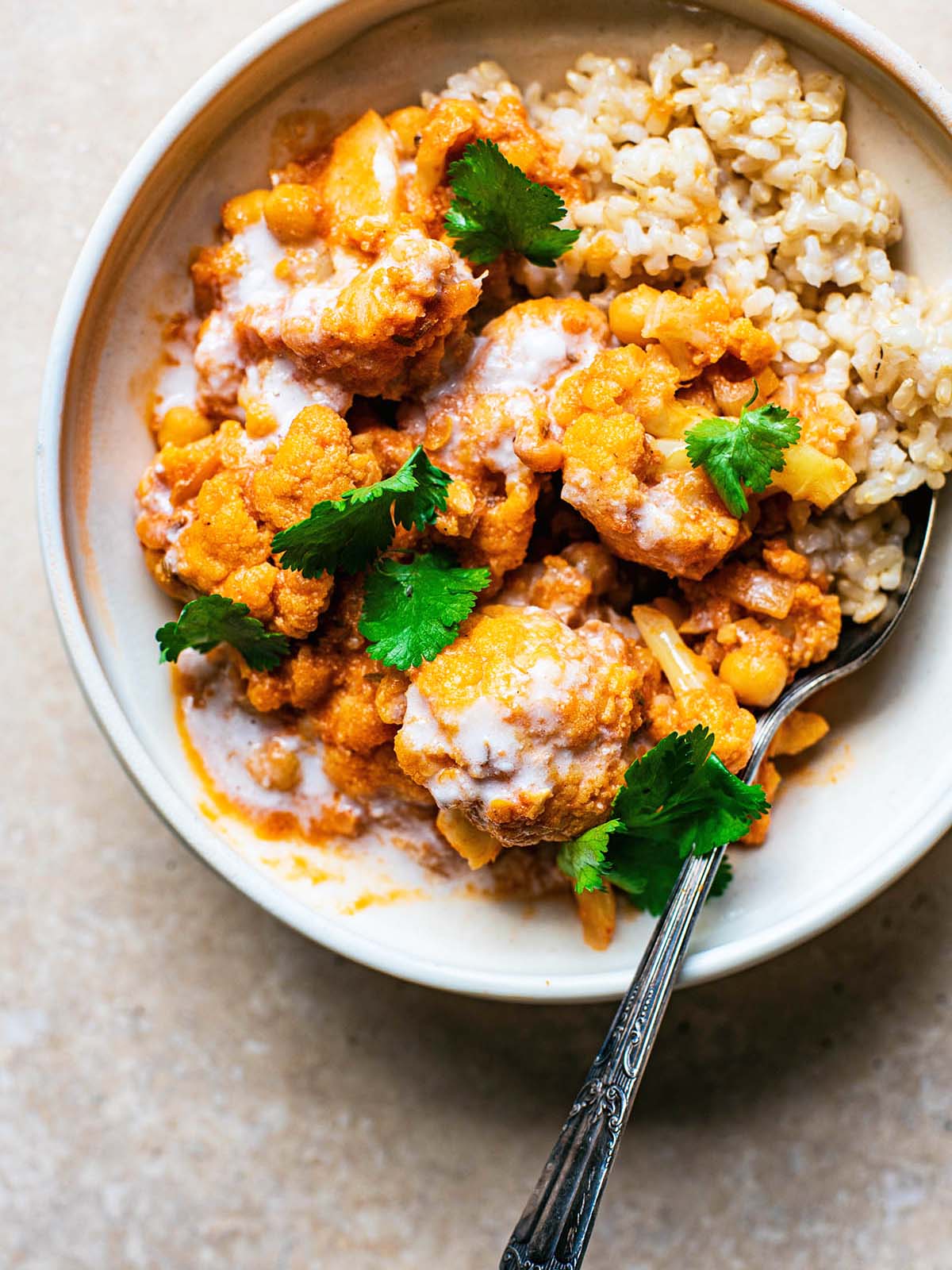
- Serve with: I usually serve vegetarian tikka masala with brown rice. It’s a good match because brown rice takes about 40 minutes to cook, so if you start it just before you start on the tikka masala, they’ll both be done right around the same time. If you prefer it, naan is a great fit too.
More Cauliflower Recipes
Cauliflower Tikka Masala
Description
Ingredients
- 2 tablespoons oil
- 1 medium onion diced
- 2 cloves garlic minced
- 1 thumb ginger minced (~2 tablespoons)*
- 2 teaspoons garam masala
- 1 teaspoon cumin
- 1 teaspoon turmeric
- 1 teaspoon sea salt to taste
- 1 teaspoon black pepper
- ½ teaspoon cayenne pepper to taste
- 1 medium head of cauliflower cut into florets
- 400 ml (13.5 oz) passata (crushed canned tomatoes)
- 200 grams (1 cup) chickpeas cooked or canned, rinsed well
- 400 ml (13.5 oz) full-fat canned coconut milk cream only**
- 1 teaspoon sugar or honey
To Serve
- Brown rice or naan
- Fresh coriander (cilantro)
Instructions
- If planning to serve with brown rice, start it now so that it has time to cook while the tikka masala is cooking.Brown rice or naan
- Heat a large, heavy lidded pot over medium heat. Once the pot is hot, pour in the oil. Add the onion, garlic, and ginger. Reduce the heat to low and cook for 8 to 10 minutes, stirring frequently, until the onion is translucent and fragrant. Add a splash of water and reduce the temperature if the vegetables are sticking to the bottom of the pot.2 tablespoons oil, 1 medium onion, 2 cloves garlic, 1 thumb ginger
- Add the garam masala, cumin, turmeric, salt, black pepper, and cayenne pepper. Stir and cook for about 30 seconds.2 teaspoons garam masala, 1 teaspoon cumin, 1 teaspoon turmeric, 1 teaspoon sea salt, 1 teaspoon black pepper, ½ teaspoon cayenne pepper
- Add the cauliflower and stir to coat it in the spices. Stir in the passata and chickpeas. Cover and increase the heat to bring the curry to a low boil, then reduce the heat to simmer for 30 minutes, or until the cauliflower is tender when pierced with a fork.1 medium head of cauliflower, 400 ml (13.5 oz) passata (crushed canned tomatoes), 200 grams (1 cup) chickpeas
- Stir in the coconut milk and sugar. Taste and season if needed, and serve over brown rice. Leftovers will keep well in a sealed container in the refrigerator for three days, and can be frozen up to three months.400 ml (13.5 oz) full-fat canned coconut milk, 1 teaspoon sugar, Fresh coriander (cilantro)
Video
Notes
Nutrition
Nutrition is provided as a courtesy and is an estimate. If this information is important to you, please have it verified independently.
About Alexandra Daum
Alexandra Daum is a professional recipe developer, food photographer, and cookbook author. She started sharing carefully tested vegetarian recipes in 2014 and has since published hundreds of recipes with seasonal ingredients and whole grains as the focus. Her work has been featured on CTV, in House & Home and Chatelaine, on popular websites like Buzzfeed and Best Health, and in countless other publications.