

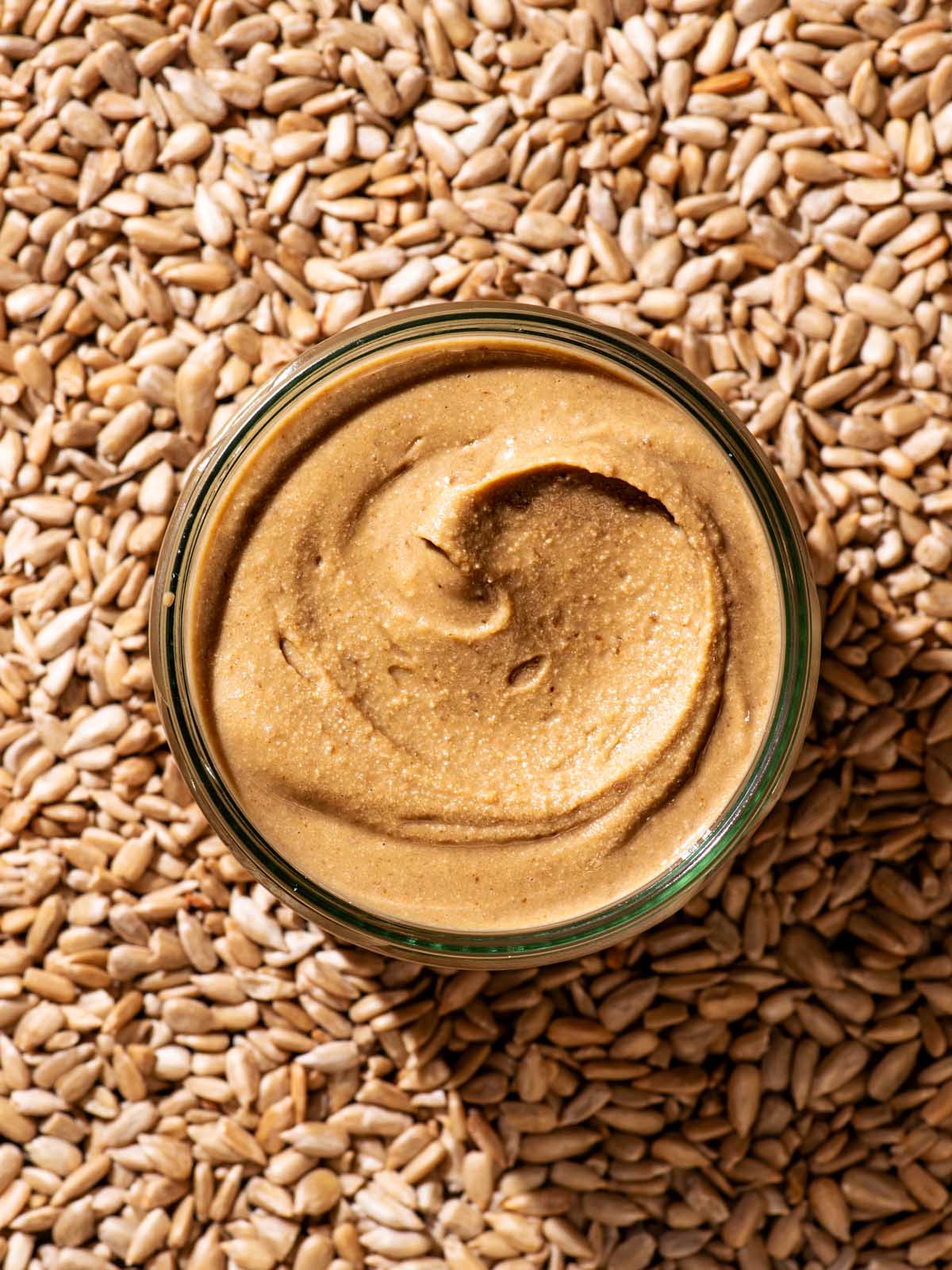
Nut-Free Sunflower Seed Butter

I always have sunflower seeds as I use them in baking and cooking as a more affordable nut substitute. Sunflower seed butter is a great inexpensive alternative to nut butters. If you have little kids who can’t bring nuts to school/daycare, this is great to send with them and can be sweetened (see below for how to do that).
A bag of sunflower seeds costs a fraction of the same amount of nuts and when I make nut butter at home, I usually use about half seeds anyway to offset the cost. They’re fairly neutral and the stronger flavour of the nuts usually takes over. We often use sunflower seed butter as a budget-friendly replacement for tahini in dressings and for baking.
It’s a fantastic back pocket recipe to have and a whole-foods kitchen staple. If you prefer you can use raw sunflower seeds, but roasting them makes it easier to blend into a smooth butter due to natural oils releasing during cooking, and adds a pleasant toasted flavour.

I first shared this recipe in 2018. It’s been updated with improvements to the recipe instructions and a retested and improved recipe, new photos, including step-by-step photos, and more helpful information.
I don’t use affiliate links. Any links you see here are to other recipes or related information, not paid links.
Ingredients You’ll Need and Why
You really only need two ingredients: sunflower seeds and salt. The dates are added to sweeten slightly as sunflower seeds can be quite bitter. These are my notes from recipe testing. You can find the full recipe card below with complete measurements and instructions.
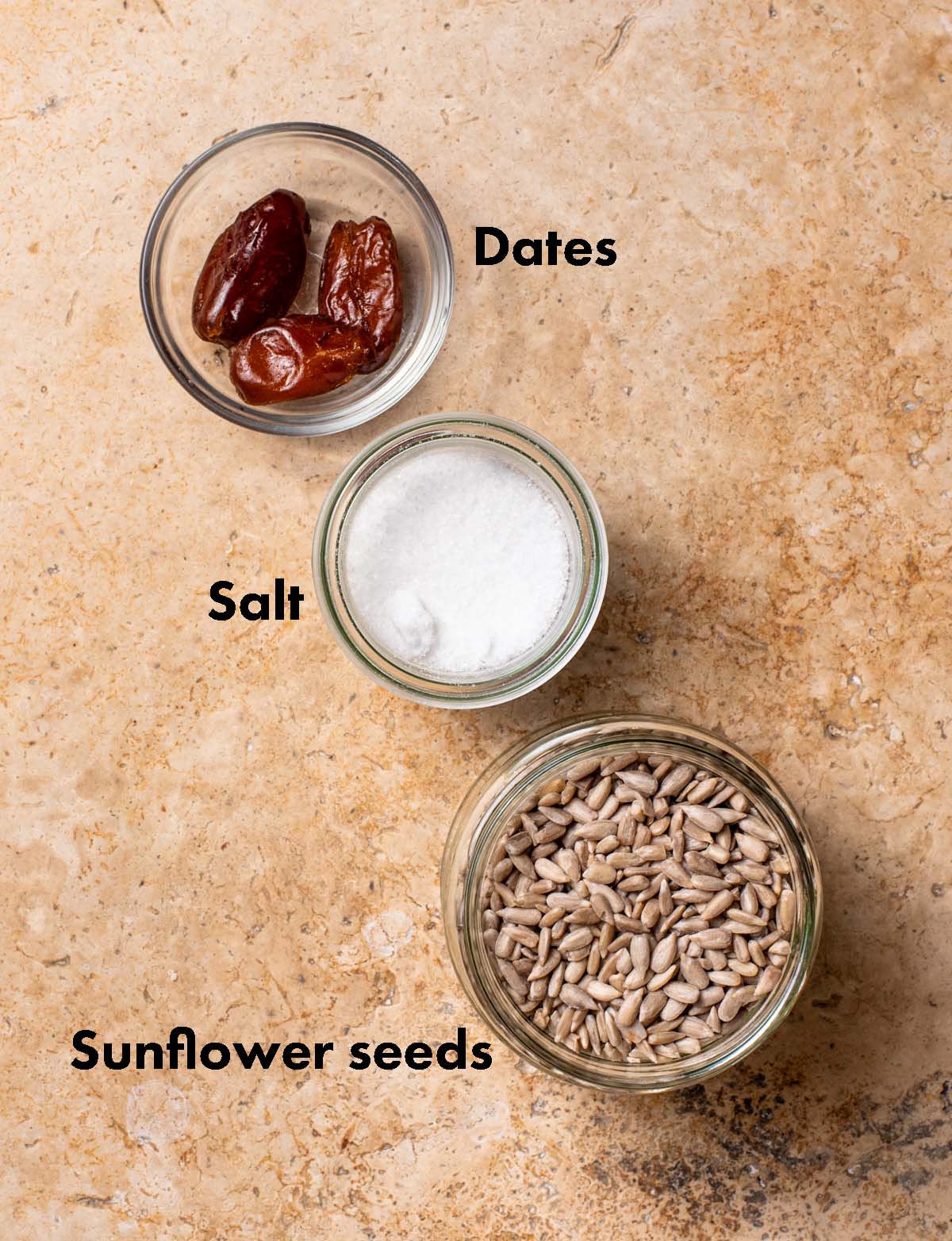
- Sunflower seeds: these should be raw, unsalted seeds that you roast yourself. Store-bought roasted sunflower seeds are usually cooked in oil and will make for a very different seed butter if used.
- Salt: a pinch of salt improves the taste. You can omit the salt if trying to avoid sodium. Try mixing in other spices, like cinnamon or cardamom, instead to boost the flavour.
- Dates: this is the easiest way to gently sweeten sunflower seed butter without causing it to seize. You can roast the seeds with sweetener (see my maple hazelnut butter) but it’s trickier than simply adding a couple of dates. Don’t add liquid sweetener to the seeds while blending, which makes the mixture seize and harden.
How to Make Sunflower Seed Butter
Ideally you should use a standard food processor for this recipe, but in the step-by-step photos below I had to use a mini processor attachment for an immersion blender. It does work well but can only handle about half the amount, and will definitely need to be turned off a couple of times and set aside to cool during the mixing process.
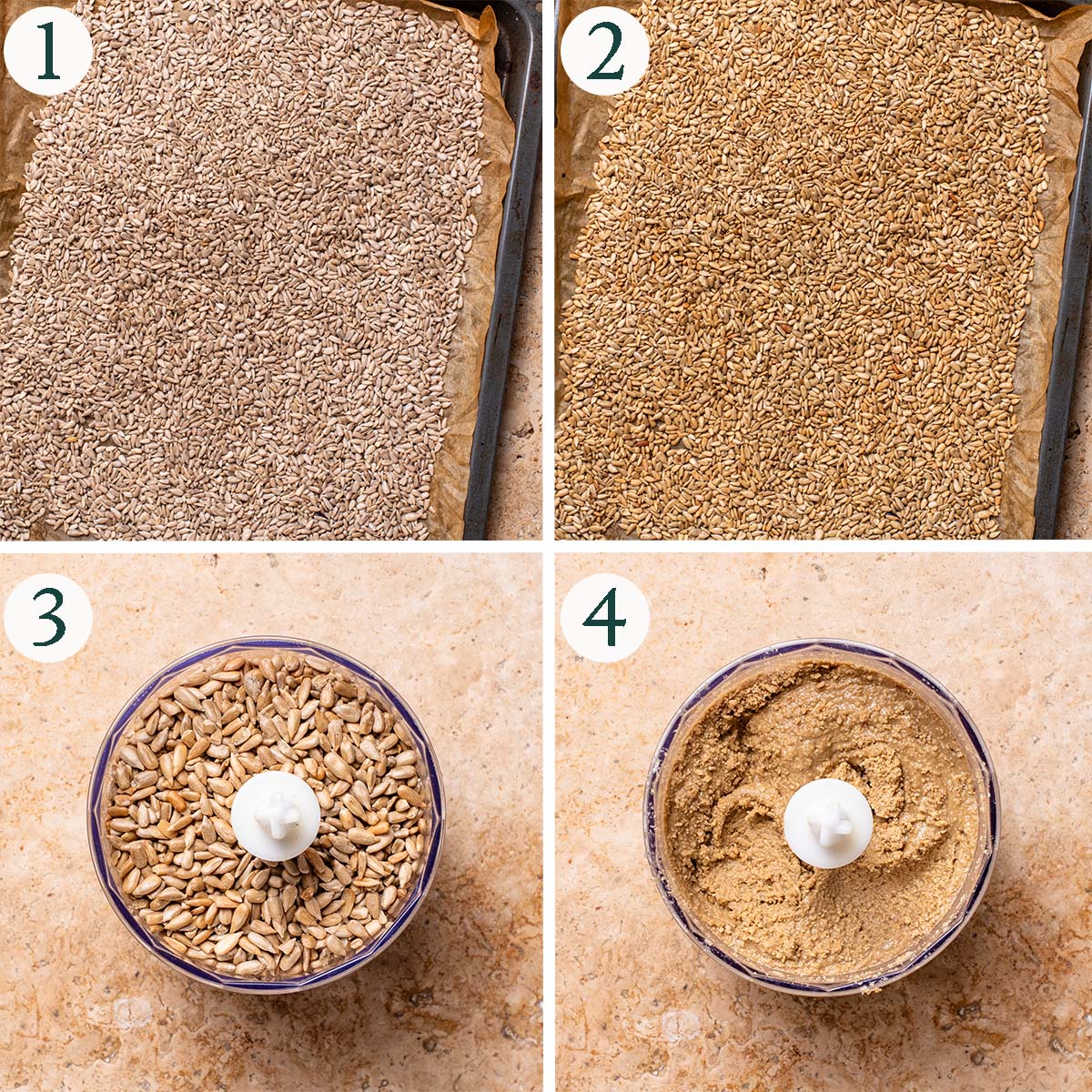
Step 1: place the sunflower seeds on a baking sheet and spread into an even layer. Use the largest baking sheet you have for this. I line the sheet for easy removal – simply pick up the four edges of the parchment paper, then use the paper to funnel the roasted seeds into the food processor.
Step 2: roast the seeds until lightly golden, about 15 minutes. Set aside to cool for at least 15 minutes, or ideally until the seeds are at room temperature. Mixing while hot will cause the food processor to overheat more rapidly.
Related: Homemade Peanut Butter
Step 3: transfer the cooled seeds to a food processor. Make sure it’s not over-full, leaving at least 5cm (2 in.) between the seeds and the top of the container.
Step 4: start blending. The seeds will turn into a meal first, like almond meal, before starting to break down into a rough paste. Scrape down the sides of the food processor as needed.
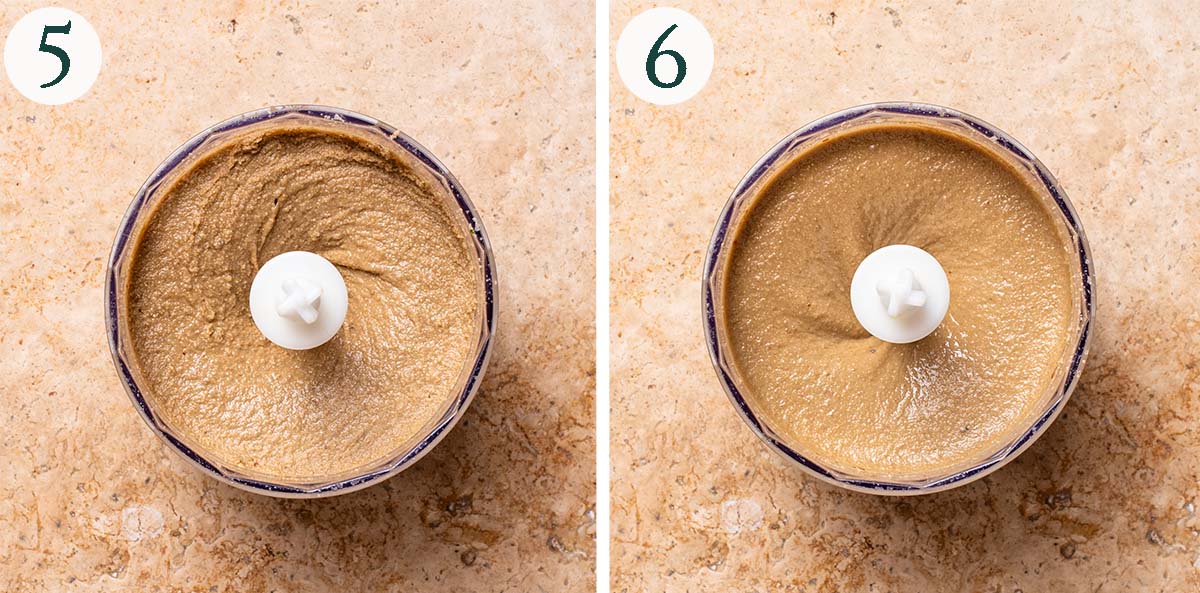
Step 5: this is where you might be tempted to stop blending, but it’s too soon! You can see here there’s still quite a bit of visible texture and the butter isn’t immediately slumping once the food processor is turned off, but rather keeping it’s shape for the most part. It’s not ready yet.
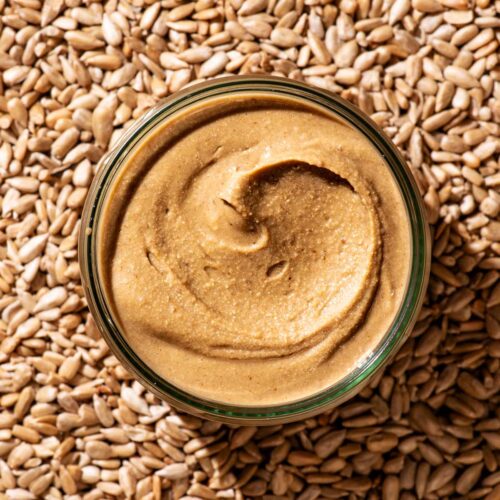
Step 6: keep blending until the seed butter is very smooth, with very little texture and a liquid consistency. When finished mixing, sunflower seed butter should be smooth and fairly runny, easily drizzling from a spoon and not keeping its shape when stirred. It will be warm at this point. Once cooled to room temperature, it will be slightly stiffer (see the primary photo at the top of the post).
Expert Tips for the Best Seed Butter
- Stick to dry sugars: never add liquid sweetener like maple syrup or honey. It will cause the sunflower seed butter to seize and prevent it from turning into the smooth, glossy mixture you’re going for.
- Don’t reduce the recipe: this is ideal for a standard food processor. If you use less seeds, it won’t mix properly. A little more is fine but I wouldn’t double it.
- Blend a little longer: mix until you think it’s done, then mix for another minute. It should be very smooth when resting and quite oily looking.
- Sweeten to taste: sunflower butter can be a little bitter, especially if you’re not used to it, so adding dates sweetens without having to add granulated sugar. You can also use coconut sugar or another dry sweetener like maple sugar if preferred.
- Use a high-powered blender: like any nut or seed butter, this does do best with a higher-powered food processor or a high speed blender that works with dry ingredients. With a low power processor you’ll have to stop and let it cool down every few minutes.
Roasted Sunflower Seed Butter
Description
Ingredients
- 400 grams (3 cups) raw sunflower seeds
- 1 teaspoon sea salt to taste
- 2 to 3 soft dates optional
Instructions
- Preheat your oven to 150°C (300°F). Place the sunflower seeds onto a large baking sheet, optionally line with parchment paper, and spread into an even layer. Roast for 10-15 minutes, or until lightly golden. Remove from the oven and cool for at least 15 minutes.400 grams (3 cups) raw sunflower seeds
- Place the roasted seeds into the bowl of a food processor fitted with the blade attachment. Blend for about 10 minutes, stopping if the processor heats up, and scraping down the sides of the bowl with a spatula if needed.
- Once it's almost finished, add the salt and dates, then blend another minute. Blend until very smooth and shiny looking, then go a little longer just in case.1 teaspoon sea salt, 2 to 3 soft dates
- Store the finished sunflower seed butter in a sealed jar in the refrigerator for two weeks or longer.
Notes
Nutrition
Nutrition is provided as a courtesy and is an estimate. If this information is important to you, please have it verified independently.
Apple Cinnamon Oatmeal
Oatmeal Peanut Butter Energy Balls
Carrot Cake Baked Oats
Pumpkin Baked Oats
About Alexandra Daum
Alexandra Daum is a professional recipe developer, food photographer, and cookbook author. She started sharing carefully tested vegetarian recipes in 2014 and has since published hundreds of recipes with seasonal ingredients and whole grains as the focus. Her work has been featured on CTV, in House & Home and Chatelaine, on popular websites like Buzzfeed and Best Health, and in countless other publications.