

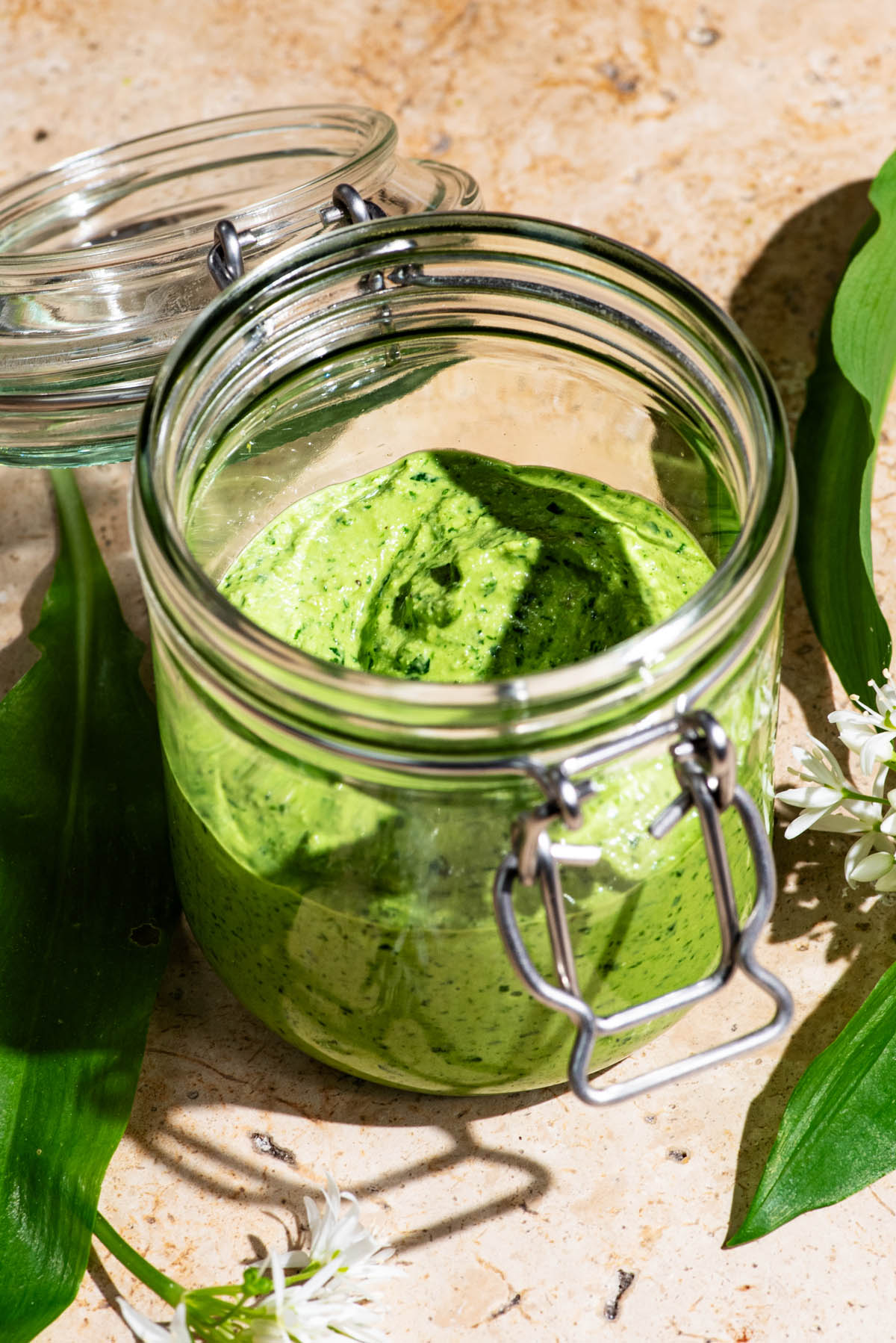
Wild Garlic Pesto for Springtime

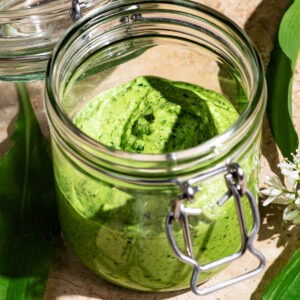
Wild garlic or ramsons are everywhere in spring. It’s the first edible thing, really, to pop up in the spring and foragers are obsessed for the first little while before everyone gets sick of it closer to the end of the season (I do not, and could eat it every day). This wild garlic pesto is a great way to use the abundance of this spring green. See also wild garlic salt and wild garlic soup.
This pesto is on the thicker side, so it can be used as a sandwich spread as well as in pasta, pizza, and wherever else you’d usually use pesto. The paler green colour is because it has a pile of seeds in it – which also makes it surprisingly high in protein – and the flavour of the wild garlic comes through without being overwhelming.
To harvest wild garlic yourself, it is best to go with someone knowledgeable because it looks similar to lily of the valley, which is poisonous. It is easy to tell if you crush the leaves slightly and smell them, because wild garlic has such a strong smell, but it’s not a mistake you want to make. If you live in North America, you can use ramps interchangeably with the ramsons in this recipe.

I first shared this recipe in 2019. It’s been updated with improvements to the recipe instructions and slight improvements to the recipe, new photos, including step-by-step photos, and more helpful information.
I don’t use affiliate links. Any links you see here are to other recipes or related information, not paid links.
Ingredients You’ll Need and Why
The ingredients shown here make up the basic, necessary ingredients for this pesto. Add-ins and alternatives are outlined below. These are my notes from recipe testing and from making this every spring for years, and you can find the full recipe card below.
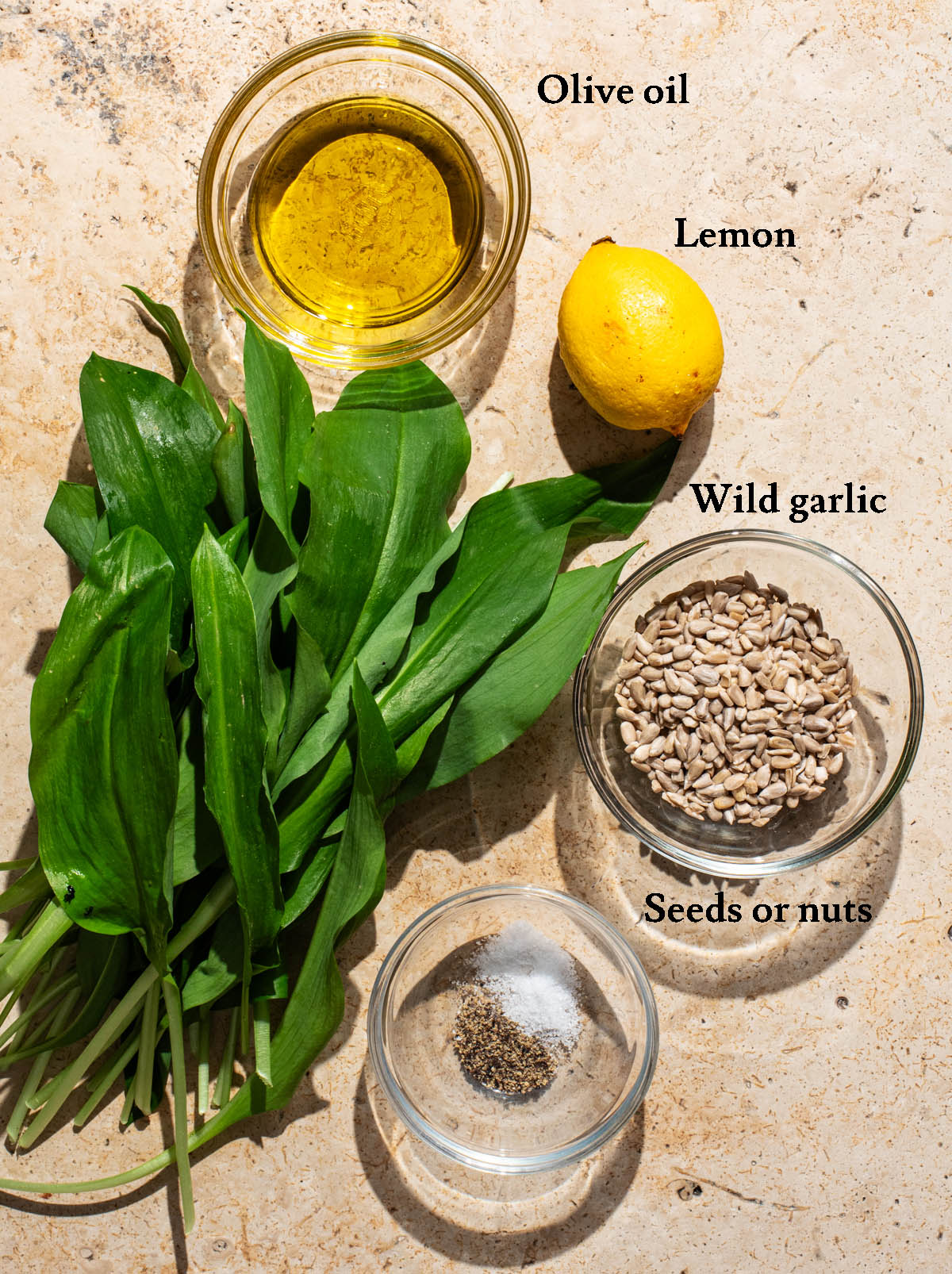
- Wild garlic: store-bought or foraged yourself, if you know where to look. Wild garlic is best used as soon as possible after harvest. Plan to make the pesto the day you pick the leaves rather than refrigerating them beforehand.
- Seeds or nuts: sunflower seeds, pine or cedar nuts, walnuts, and hemp hearts are all excellent. I generally prefer sunflower seeds due to the price point but any mild seed or nut will work.
- Lemon: a little lemon juice adds the necessary acidity to balance pesto. Without it your pesto will taste flat.
- Olive oil: this simply makes a more traditional tasting pesto, even without the basil. If you want a more local option, try an oil that’s grown and produced in your region. If you’re too far north for olives, think organic canola oil, hemp, flax, walnut, and so on.
- Add-ins: mix in some finely grated hard aged cheese like pecorino, or a tablespoon or two of nutritional yeast to get some of that flavour in a vegan version. You can add other herbs like basil and parsley if you’d like.
How to Make Wild Garlic Pesto
These steps show the pesto having been made with an immersion blender and it results in a smoother, less textured pesto. I used to make it in a food processor but 1. I don’t have one anymore and 2. I prefer the texture with an immersion blender.
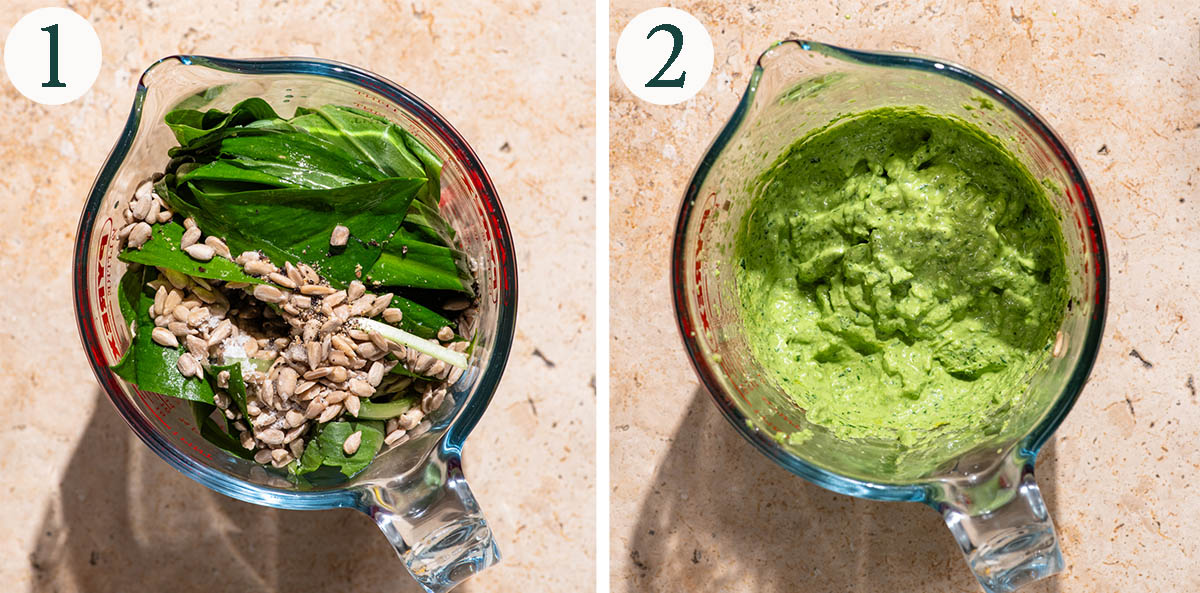
Step 1: add all of the ingredients but the olive oil to a mixer or container. Give the wild garlic a good rinse beforehand but don’t wash with soap or baking soda (believe me, I’ve been asked).
Step 2: blend until the leaves and seeds or nuts have broken down, then add the oil in a slow stream, blending, until combined. If the container is moving too much place a damp tea towel under it to prevent it from turning while blending with the immersion blender.
If you can’t see the recipe video in the post, you can watch a version here on Instagram instead.
Expert Tips
- Don’t add extra garlic: wild garlic generally does have a strong garlic flavour and you really don’t need to add a garlic clove to the blend. With that being said, though, if raw garlic bothers your stomach you might be fine with this pesto.
- Try an immersion blender: if you don’t have a food processor, a decent immersion blender is a fraction of the price, much easier to store, and works very well for recipes like this one. The mini food processors that come with immersion blenders work well too, but you have to add the oil with everything else.
- Add the oil second: mixing while adding the oil in a slow stream emulsifies the mixture, making it creamier and less likely to separate when stored.
- Be careful when harvesting: as with any wild food, you don’t want to take everything that’s there. Harvest with a light hand and leave the roots intact so that the plant can come back next year. Choose areas without very high human or dog traffic (not right along a busy path).
If you make this Wild Garlic Pesto recipe or any other vegetarian dips on Occasionally Eggs, please take a moment to rate the recipe and leave a comment below. It’s such a help to others who want to try the recipe. For more OE, follow along on Instagram, Facebook, and Pinterest, purchase the Occasionally Eggs cookbook, or subscribe for new posts via email.
Wild Garlic Pesto
Description
Ingredients
- 70 grams (½ cup) sunflower seeds or other seeds or nuts
- 30 grams (1 cup) wild garlic
- ½ teaspoon sea salt to taste
- ½ teaspoon black pepper
- 2 lemons, juiced ~ 80 ml (⅓ cup)
- 50 ml (¼ cup) olive oil
Instructions
- Add the seeds, wild garlic, salt, pepper, and lemon juice to a food processor fitted with the blade attachment. Blend on high until mostly smooth, and then add the olive oil in a slow drizzle while blending until combined. Continue to mix until the pesto is as smooth you'd like it to be.70 grams (½ cup) sunflower seeds, 30 grams (1 cup) wild garlic, ½ teaspoon sea salt, ½ teaspoon black pepper, 2 lemons, juiced, 50 ml (¼ cup) olive oil
- Season to taste. Serve mixed with pasta, on bread, pizza, or crackers, or mix into salad dressing. Store in a sealed container in the refrigerator for up to five days.
Video
Notes
Nutrition
Nutrition is provided as a courtesy and is an estimate. If this information is important to you, please have it verified independently.
Sautéed Savoy Cabbage
Pesto Pasta Salad
Chickpea Salad
Chickpea Pasta Salad
About Alexandra Daum
Alexandra Daum is a professional recipe developer, food photographer, and cookbook author. She started sharing carefully tested vegetarian recipes in 2014 and has since published hundreds of recipes with seasonal ingredients and whole grains as the focus. Her work has been featured on CTV, in House & Home and Chatelaine, on popular websites like Buzzfeed and Best Health, and in countless other publications.