

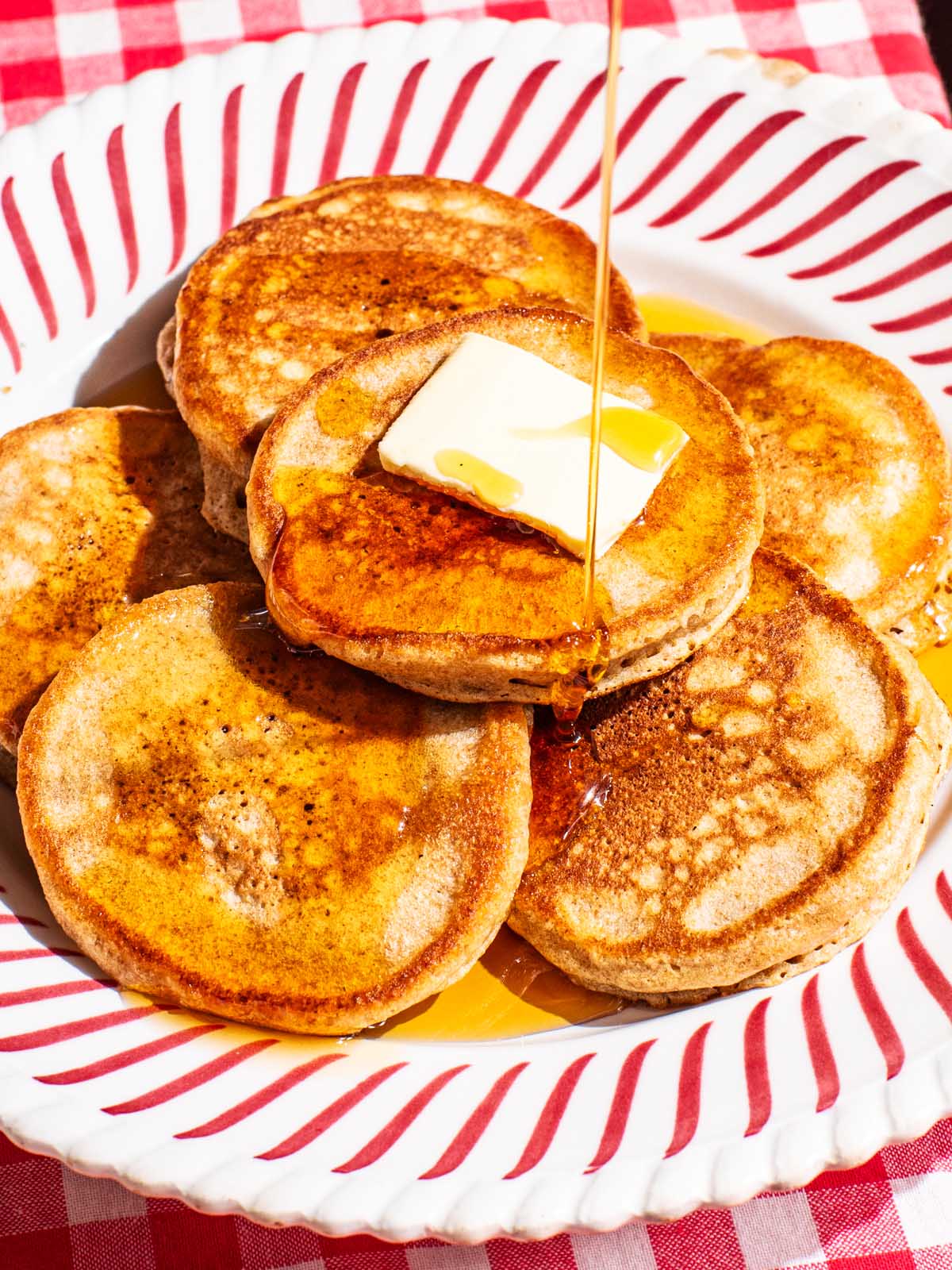
100% Whole Grain Emmer Pancakes

I know emmer isn’t the most popular ancient grain, and I’m not sure why – it tastes great, it’s less expensive (in my experience) than einkorn and khorasan, and it’s easy to work with. These emmer pancakes make good use of it for a light, airy pancake with an excellent texture and flavour.
Beaten egg whites to add volume to the batter for this recipe. Folding whipped egg whites into pancake and waffle batter is an old method that you’ll see in recipes before chemical leavening agents were invented (commercial baking soda and powder). Using those egg whites in modern recipes like this one results in very light pancakes despite the whole grain flour.
The pancakes are sweetened with honey instead of sugar, which is due to personal preference, but I also figure that readers using emmer might also choose honey. I use honey when possible because it’s the most local and least processed sweetener I can access, so it needs less energy for processing, shipping, and so on. There is a note provided if you want to use sugar instead.

I don’t use affiliate links. Any links you see here are to other recipes or related information, not paid links.
Ingredients You’ll Need and Why
If you’ve chanced upon this recipe, emmer is an ancient grain that was definitely being cultivated during the Neolithic period and is now in fairly common use in most of Europe. Some farmers grow it on a small scale in North America, where it’s often incorrectly labelled as farro. These are my notes from recipe testing and you can find the full recipe card below.
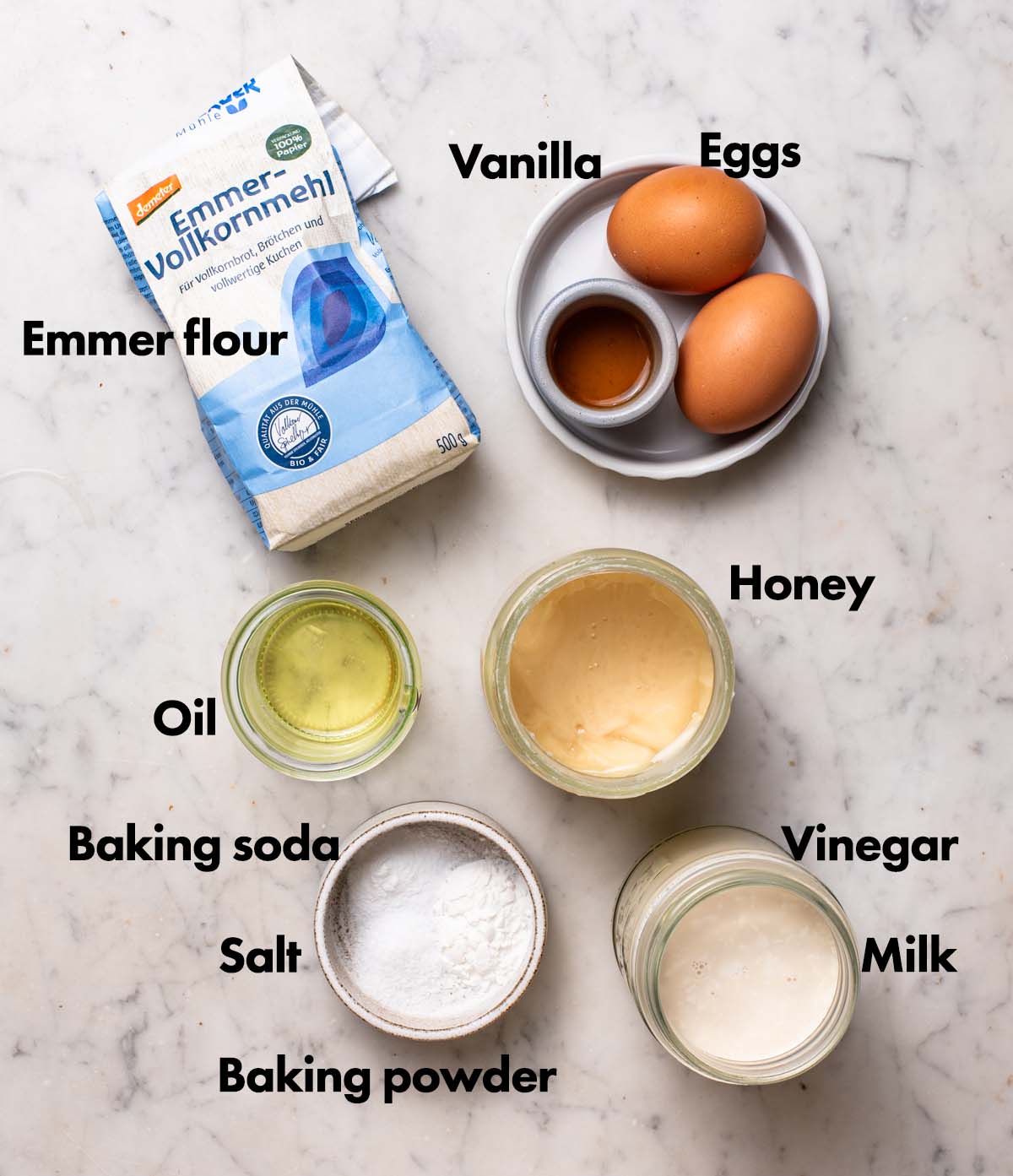
- Emmer flour: I’ve tested this recipe with store-bought emmer flour and home-milled emmer (I use a komo) both with good results. With that being said, I only weigh ingredients and never use measuring cups, so I always recommend that you do the same, especially if you’re using a home mill. I haven’t tested with sifted or light emmer but it should be fine.
- Milk: for the best results, use soya or dairy milk. I always use soya milk, which is the highest in protein of non-dairy milks, so it has the most similar behaviour to dairy and will curdle more than an alternative like oat milk. If using dairy, whole milk will make the richest pancakes but any will work. You can use any type of carton-style milk (e.g. oat, almond, cashew, but not canned coconut milk) and the pancakes will still turn out well.
- Eggs: an important element of the recipe, for binding and lift, I don’t recommend trying the pancakes without. For the best results use room temperature eggs.
- Buttermilk: I’ve only tried with homemade buttermilk, so the recipe calls for milk with vinegar mixed into it. True buttermilk is a little thicker so you would probably need to add slightly more than the recipe calls for.
- Oil: use any light-tasting oil or sub melted butter if preferred.
- Honey: if you want to use sugar instead, add three tablespoons but also whisk it in with the wet ingredients.
- Baking powder and soda: you don’t need a lot of either because you have two additional agents at work here to lift the pancakes – the vinegar reacts with the baking soda, providing additional height, and the egg whites add a physical lightness.
How to Make Emmer Pancakes
This is a slightly more involved pancake recipe, with whipped egg whites adding lightness and structure. If you want a recipe that doesn’t need eggs, try emmer flour in my spelt pancakes. You can also skip whipping the egg whites and simply mix whole eggs in with the other wet ingredients, but note that the pancakes will be significantly denser.
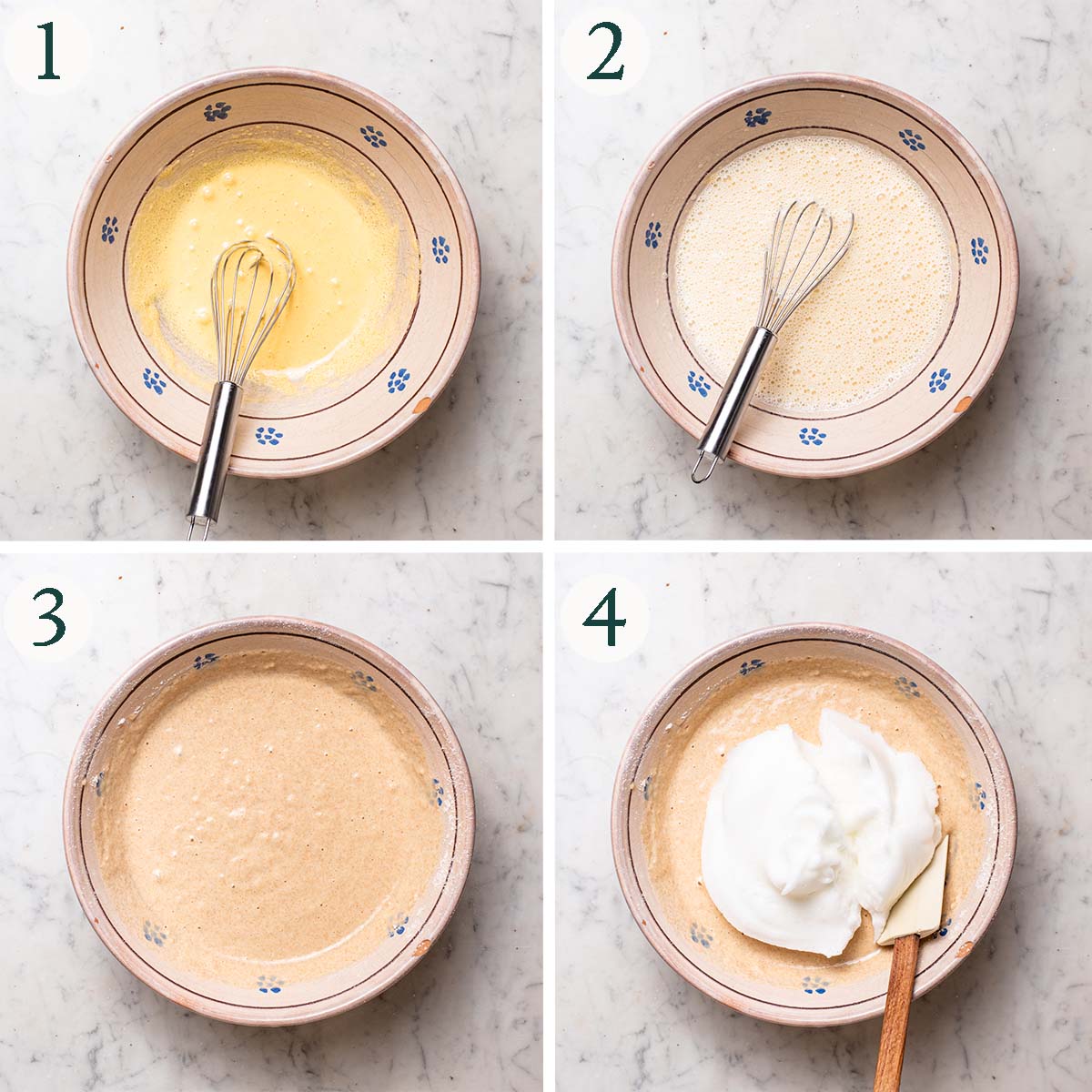
Step 1: separate the eggs and beat the whites until just stiff. Set aside. Mix the milk and vinegar and set aside for five minutes to curdle. In a large mixing bowl, whisk the egg yolks and honey to combine. It makes it much easier to incorporate this way if using creamed honey. If you’re using runny honey or substituting sugar, you can skip this and instead mix all the wet ingredients together at once.
Step 2: add the milk and vinegar mixture, oil, and vanilla to the mixing bowl and whisk again to combine. If you choose to use melted butter instead of oil, melt and cool to room temperature before adding.
Step 3: sift in the flour, baking powder and soda, and salt to the bowl. I recommend sifting to avoid any lumps, especially in the baking soda, but if you don’t have a fine sieve you can give it a good whisk in a separate bowl before adding. Some bran might be present in the sieve from the flour, and if there is, simply add it to the bowl. The goal is not to sift the bran from the flour (this will depend on how fine the mesh is on the sieve).
Step 4: add the beaten egg whites to the bowl and fold in to combine. There should be no liquid egg white left if they’re beaten properly. An electric mixer is faster and easier than beating by hand.
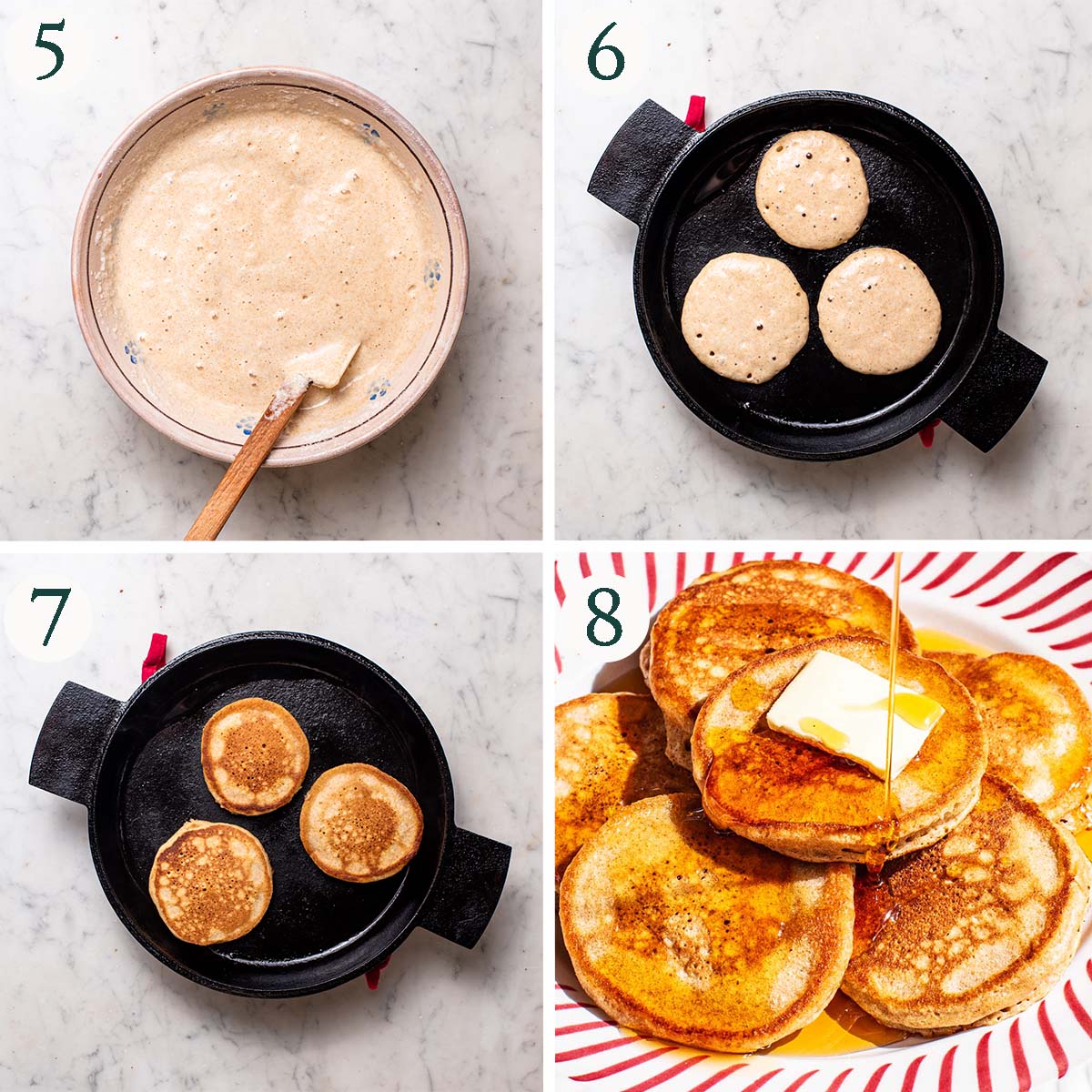
Step 5: once the whites are folded in, there should be no visible lumps of egg white in the batter. Gently break up any larger pieces with the spatula if needed. The batter should be very light.
Step 6: cook the pancakes in a preheated pan until bubbles start to appear before flipping. I just have the one pan, a well-seasoned cast iron frying pan, but any type should work as long as it is preheated, even stainless steel.
Step 7: flip the pancakes and cook for another minute before repeating the process to use all the batter. The number of pancakes the recipe makes will depend on the size you choose to make the pancakes. Those pictured are fairly small.
Step 8: serve warm with desired toppings.
Expert Tips for the Best Pancakes
- Use home-milled or store-bought: I very rarely, almost never, make changes to my recipes based on whether I’ve purchased flour or milled it myself. This might be because if I do buy flour it’s in small bags as pictured (in other words, it’s relatively fresh) but my opinion is that if you’re measuring correctly, it’s essentially a non-issue. Problems arise with bagged vs home-milled flour when you measure with cups.
- Don’t skip the vinegar: if you omit the vinegar from the milk, the pancakes will have a slight metallic flavour from the baking soda.
- Preheat the pan properly: the idea that the first pancake always flops comes down to not being patient enough to fully preheat the pan. Give it enough time to heat through, and the pancakes will be perfect from the start.
If you make this Emmer Pancakes recipe or any other vegetarian breakfast recipes on Occasionally Eggs, please take a moment to rate the recipe and leave a comment below. It’s such a help to others who want to try the recipe. For more OE, follow along on Instagram, Facebook, and Pinterest, purchase the Occasionally Eggs cookbook, or subscribe for new posts via email.
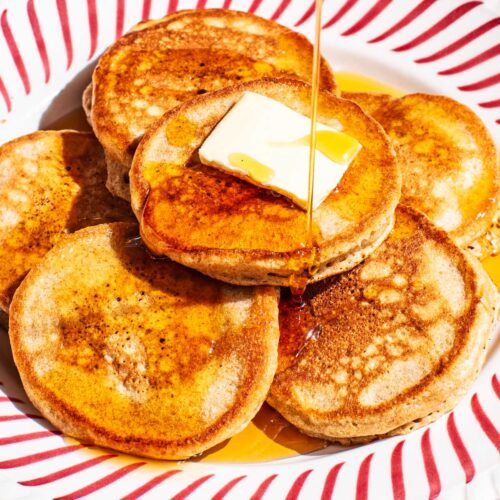
Emmer Pancakes
Description
Ingredients
- 300 ml (1 ¼ cup) milk dairy or non-dairy. I use soya milk
- 1 teaspoon apple cider vinegar
- 2 large eggs separated
- 2 tablespoons honey OR 3 tablespoons sugar
- 2 tablespoons oil or melted butter
- 2 teaspoons vanilla extract
- 250 grams (~1 ⅔ cups) whole grain emmer flour
- 1 teaspoon baking powder
- ½ teaspoon baking soda
- ½ teaspoon fine sea salt
Instructions
- Mix the milk and vinegar in a bowl and set aside for the milk to curdle.300 ml (1 ¼ cup) milk, 1 teaspoon apple cider vinegar
- Separate the eggs. Place the yolks into a large mixing bowl and the whites into a smaller mixing bowl. Beat the whites to stiff peaks and set aside.2 large eggs
- Add the honey to the egg yolks in the large mixing bowl and beat to combine. Add the milk mixture, oil, and vanilla and whisk again to incorporate into the egg yolk mixture.2 tablespoons honey, 2 tablespoons oil, 2 teaspoons vanilla extract
- Sift the flour, baking powder, baking soda, and salt into the large mixing bowl, using a fine mesh sieve. If any bran is left over after sifting, tip it into the bowl. Whisk until just combined. A few lumps are fine.250 grams (~1 ⅔ cups) whole grain emmer flour, 1 teaspoon baking powder, ½ teaspoon baking soda, ½ teaspoon fine sea salt
- Add the beaten egg whites to the bowl and gently fold with a spatula. There should be no visible lumps of egg white once it's mixed in and the pancake batter should be very light. Set the batter aside.
- Preheat a frying pan over medium heat, waiting until the pan is fully preheated. Add just enough oil to very lightly cover the bottom of the pan. Once hot, drop or pour approximate ¼ cup amounts of batter on the pan. Cook until bubbles appear in the pancakes, about a minute and a half, then flip and cook for another minute or until cooked through. Repeat, adding oil as needed, until all of the batter is used.
- Keep the pancakes warm in a 90°C (200°F) oven if needed before serving with desired toppings.
Notes
Nutrition
Nutrition is provided as a courtesy and is an estimate. If this information is important to you, please have it verified independently.
Einkorn Chocolate Chip Cookies
Garlic Knots (with Homemade Dough)
Broccoli Cauliflower Soup (No Cheese)
Gluten-Free Apple Crisp
About Alexandra Daum
Alexandra Daum is a professional recipe developer, food photographer, and cookbook author. She started sharing carefully tested vegetarian recipes in 2014 and has since published hundreds of recipes with seasonal ingredients and whole grains as the focus. Her work has been featured on CTV, in House & Home and Chatelaine, on popular websites like Buzzfeed and Best Health, and in countless other publications.