

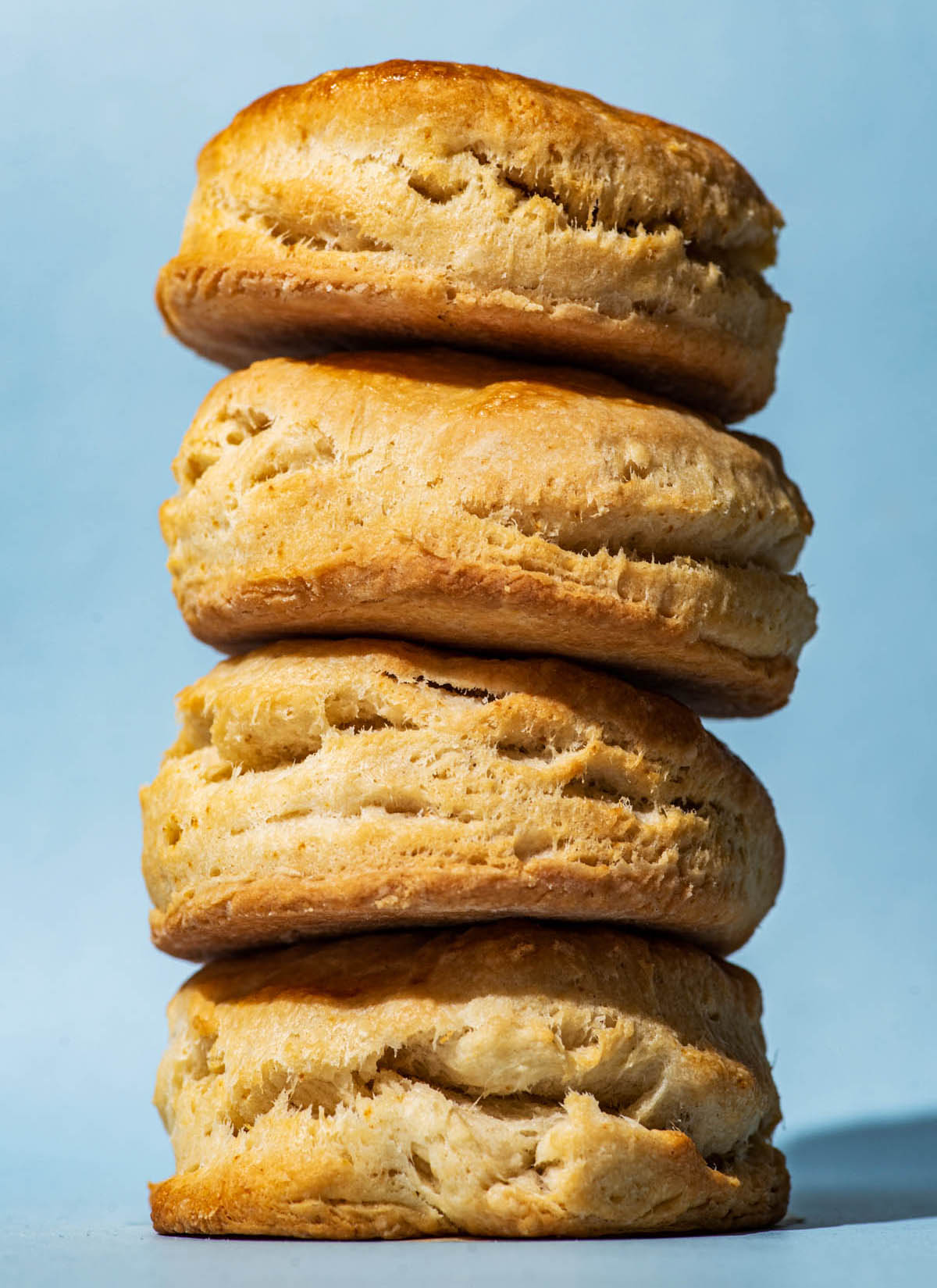
Tall, Light Vegan Coconut Oil Biscuits
You can’t go wrong with coconut oil biscuits. I’ve been making these for over a decade now and they’re always excellent. It’s a great way to make vegan biscuits without have to buy a specific type of margarine, with just six ingredients, and ready in minutes. I often don’t cut the biscuits into rounds, just quickly roll out and cut into squares, and that’s great too.
While I usually make a loaf of dark rye bread or lighter sourdough rye bread each week, sometimes it’s nice to have a quick biscuit recipe on hand for soups or as a simple side dish. I’ve made these hundreds of times over the years and they’re always a hit. Biscuits can be on the table in less than 20 minutes – about the time it takes for soup to cook!
I also find these are more reliable than trying to make American-style biscuits with butter substitutes, because they vary so much from brand to brand – coconut oil is pretty much the same no matter what. Like most of my baking recipes, these are made with spelt flour, but you can use plain white flour. More on that below.

I first published this recipe in 2017. It has been updated with more helpful information, some slight updates to improve the recipe, and new step-by-step photos.
Ingredients You’ll Need and Why
Six total ingredients, including salt. While coconut oil is essentially the same from brand to brand, it needs to be solid at room temperature and hardened to use here. These are my notes from extensively testing this recipe and you can see the full recipe card below.
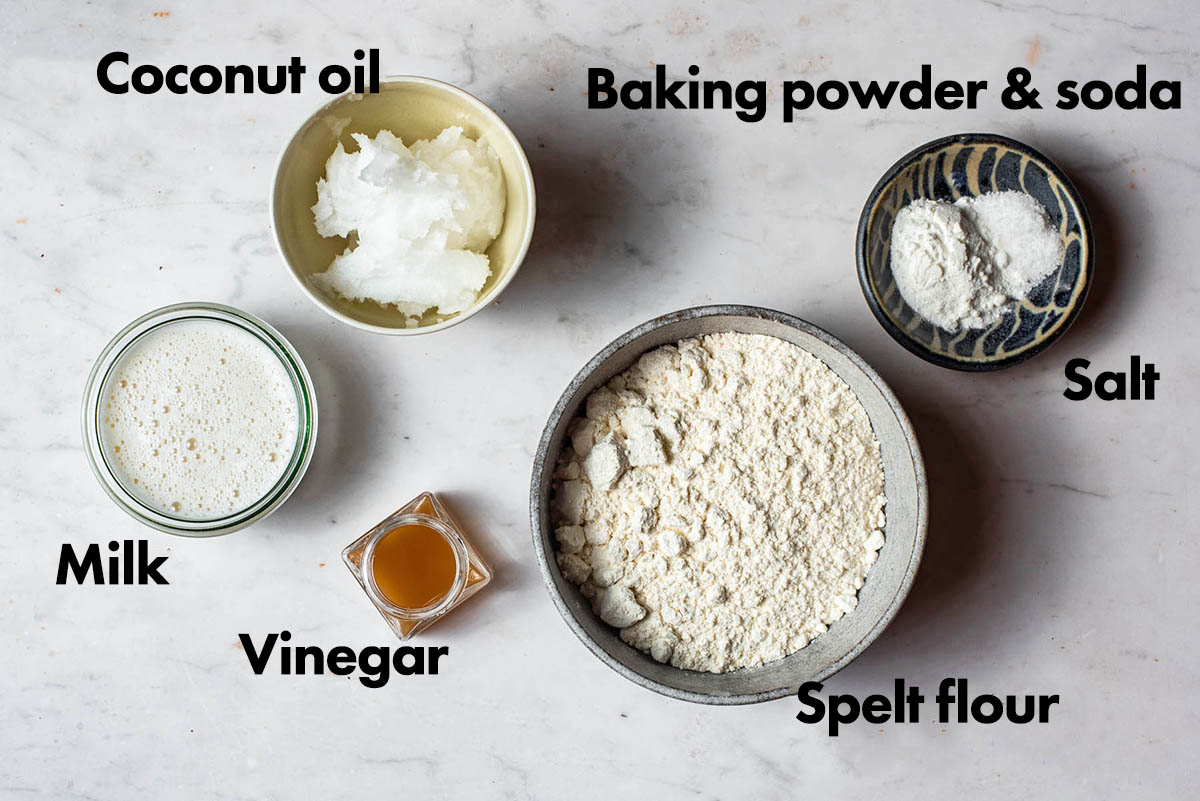
- Spelt flour: use light spelt flour for the fluffiest biscuits. Use a mix of whole grain and light, or all whole grain, if you want something more wholesome. Regular wheat flour can be subbed 1:1 if you prefer. I’ve never tested this recipe with gluten-free flour.
- Coconut oil: if you prefer not to have a slight coconut flavour, use refined coconut oil instead of cold-pressed. The coconut oil must be hard, not melted or softened, in order to get a proper rise on the biscuits. Refrigerate or freeze the amount you need before making the biscuits if necessary.
- Milk: I usually use oat milk. Any non-dairy milk can be used, even canned coconut milk, if you don’t mind a stronger coconut taste. Soya will curdle more effectively than any other non-dairy milk and make something more similar to buttermilk.
- Vinegar: apple cider vinegar is ideal but any light vinegar (not balsamic) can be used. This reacts with the baking soda for a stronger rise in the biscuits and improves the overall flavour.
How to Make Vegan Biscuits
The method is much the same as with butter biscuits, but with no need to chill the dough. If your home is very warm, you can pop the cut out biscuits on the baking sheet into the refrigerator or freezer while the oven preheats.
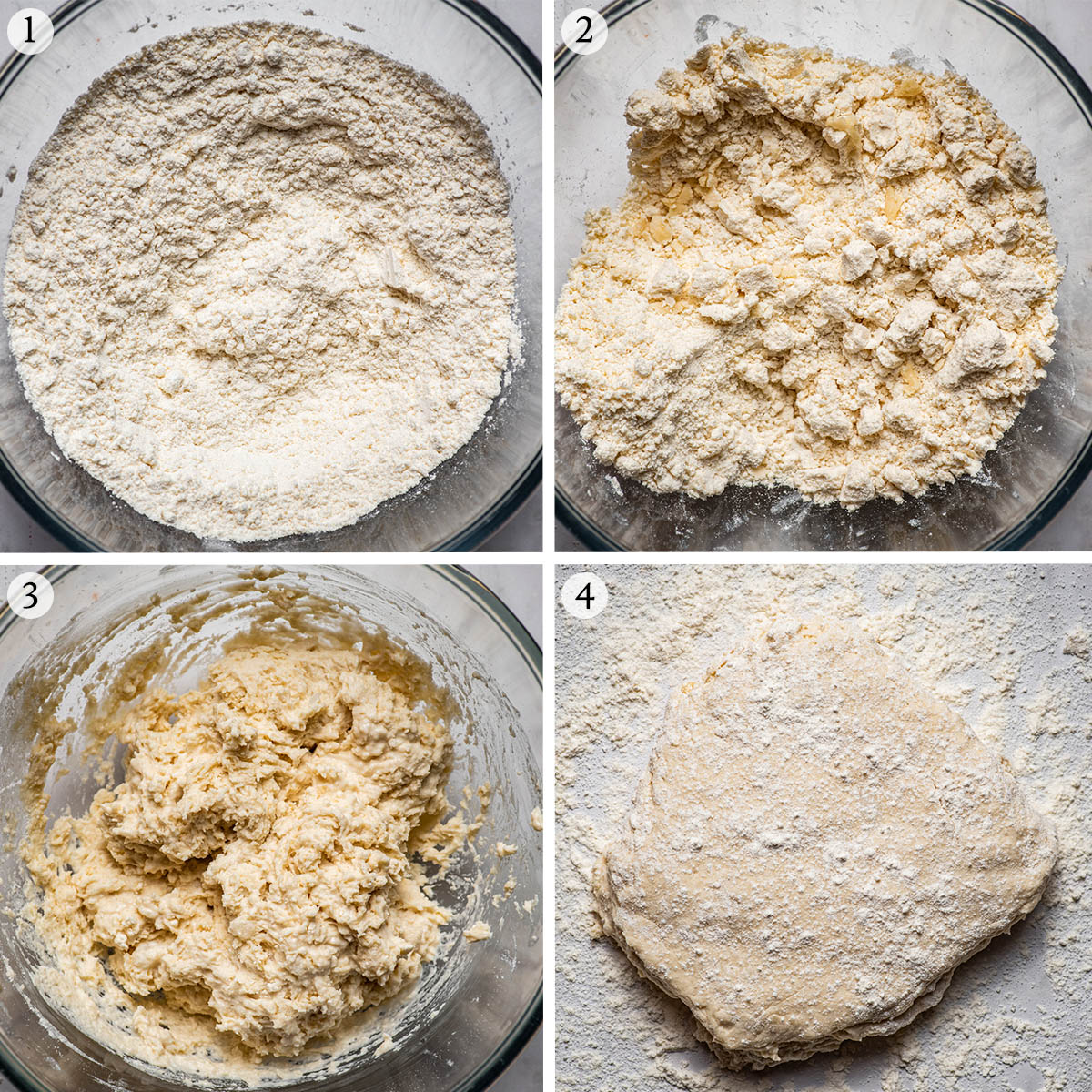
Step 1: add the dry ingredients to a mixing bowl and whisk to combine. If the baking soda or powder have any lumps, sift them through a fine-mesh sieve first to prevent any bits of baking soda in the biscuits.
Step 2: use your fingers or a pastry blender to mix in the coconut oil. It’s not as important for everything to stay extremely cold like it is for butter biscuits, so it’s perfectly all right to briefly mix with your hands. The pieces should be about pea-sized once mixed.
Step 3: use a wooden spoon or spatula to stir in the milk mixture until just combined. It’ll seem pretty soft at this point but that’s normal – you’ll be doing the next step with some flour, so it won’t stick.
Step 4: transfer to a lightly floured surface, pat into shape, then fold twice to create layers (see video if needed). Pat it out again to the right thickness, being careful not to over work the dough at this stage.
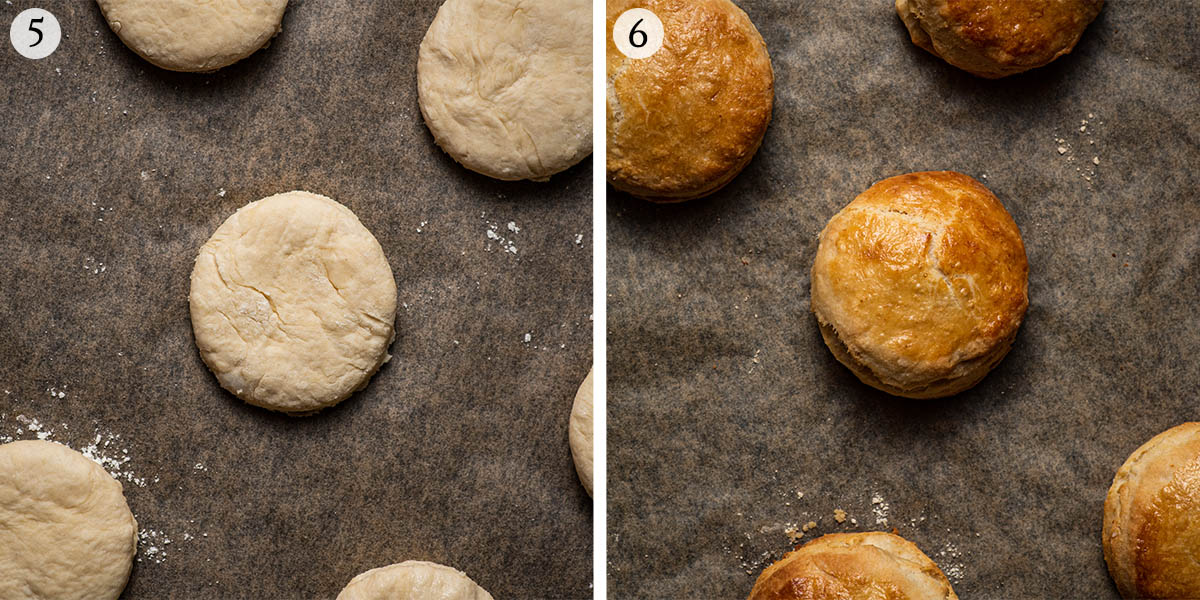
Step 5: use a knife or round cutter to cut the biscuits into your desired shape. Cutting into squares removes the need to shape the dough again, but the biscuits have a stronger rise when cut into rounds.
Step 6: place the biscuits onto a baking sheet, brush the tops with milk, and bake until golden. Depending on the type of milk, they may brown more or less. I find soya milk gives the best browning.
If you can’t see the recipe video, please watch it here on YouTube instead.
Expert Tips for the Best Biscuits
- Change the type of milk: a creamier milk will make for a richer biscuit. Regular oat milk makes them rather light, while full-fat canned coconut milk will result in something more like a tea biscuit or cream scone.
- Make drop biscuits: if you want to skip the step of cutting out the biscuits, make easy vegan drop biscuits instead. Use a regular tablespoon to drop portions of dough onto the baking sheet, then bake until lightly golden. Skip the milk wash if making drop biscuits.
- Mix with a machine: a food processor can also be used to mix the dough, particularly useful for incorporating the coconut oil. You have to be careful not to over mix if using a processor, though – be sure to pulse briefly rather than mixing for an extended period. If you’re uncertain then use it only to mix in the oil before switching to stirring in the milk by hand.
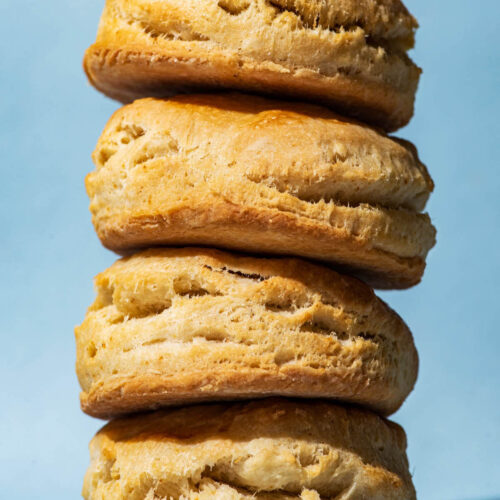
- For taller biscuits: because these are made with spelt flour and coconut oil, they’re simply not as tall as standard biscuits. If you want them to be a bit taller, bake them in a smaller dish where the edges will touch, forcing them to rise further.
- Don’t twist when cutting: when cutting round biscuits, move the cutter straight up and down, with no twisting. The twisting motion seals the edges of the biscuit and make it more difficult for it to rise properly.
- Give the buttermilk some time: you’ll want to give your ‘buttermilk’ at least five minutes to curdle slightly. This extra acid reacts with the leavening agents and creates a greater rise when baking.
- Use light hands: don’t work the dough like mad. Use quick, light hands to cut in the oil, then mix the milk in until just combined. Don’t knead as you would a yeast bread.
- Don’t overwork the dough: fold and press out the mixed dough as few times as possible to get the lightest biscuits. You can cut them into squares rather than rounds to avoid folding it for a second time.
If you make this Coconut Oil Biscuits recipe or any other vegetarian sides on Occasionally Eggs, please take a moment to rate the recipe and leave a comment below. It’s such a help to others who want to try the recipe. For more OE, follow along on Instagram, Facebook, and Pinterest, purchase the Occasionally Eggs cookbook, or subscribe for new posts via email.
Coconut Oil Biscuits
Description
Ingredients
- 200 grams (1¼ cup) spelt flour*
- 2 teaspoons baking powder
- ¾ teaspoon sea salt
- ½ teaspoon baking soda
- 80 grams (⅓ cup) solid coconut oil
- 120 ml (scant ½ cup) non-dairy milk
- 1 teaspoon vinegar
Instructions
- Start by making the buttermilk. Add the vinegar to the milk and set aside for at least five minutes.120 ml (scant ½ cup) non-dairy milk, 1 teaspoon vinegar
- Preheat the oven to 190°C (375°F) and line a baking sheet with parchment paper.
- Add the flour, baking powder, salt, and baking soda to a mixing bowl and whisk to combine. Alternatively, pulse in a food processor until mixed.200 grams (1¼ cup) spelt flour*, 2 teaspoons baking powder, ¾ teaspoon sea salt
- Add the coconut oil to the flour mixture. Use your hands to quickly mix until the oil is in small pieces, at largest pea-sized. If using a food processor, briefly pulse until the mixture resembles coarse crumbs.80 grams (⅓ cup) solid coconut oil
- Add the buttermilk you made earlier to the bowl. Use a wooden spoon or spatula to mix until just combined. The mixture will seem too wet but it should look that way.120 ml (scant ½ cup) non-dairy milk, 1 teaspoon vinegar
- Lightly flour a clean working surface, then turn the dough out onto it. Gently press the dough out to a rough square about 3 cm (1 ¼ inch) thick, then fold in half and then half again (into a square again). Press it out to 3 cm (1 ¼ in.) again.
- Cut the dough with a small biscuit cutter (8 cm / 3 inches). Bring the scraps together and roll them out again, continuing to cut biscuits until no dough remains. Alternatively, cut into squares with a sharp knife.
- Place the biscuits onto your prepared baking sheet and brush the tops with non-dairy milk. Bake for 10-12 minutes, or until golden. Best served warm.
Video
Notes
Nutrition
Nutrition is provided as a courtesy and is an estimate. If this information is important to you, please have it verified independently.

These are amazing!! Mine did not get very golden so I was skeptical at first, but they taste delicious. Light and fluffy. So happy to have found an easy (and healthy) vegan biscuit! Thank you!!
Alexandra, I think you read my mind! Yesterday I wanted to make biscuits with spelt flour, but then I abandoned the idea. Thank you for posting this, and especially about using coconut oil vs olive oil. Looking forward to trying this recipe.
They look pretty good for being vegan biscuits and made with spelt! I just love spelt flour and these biscuits would be greatly appreciated at our place ?.