

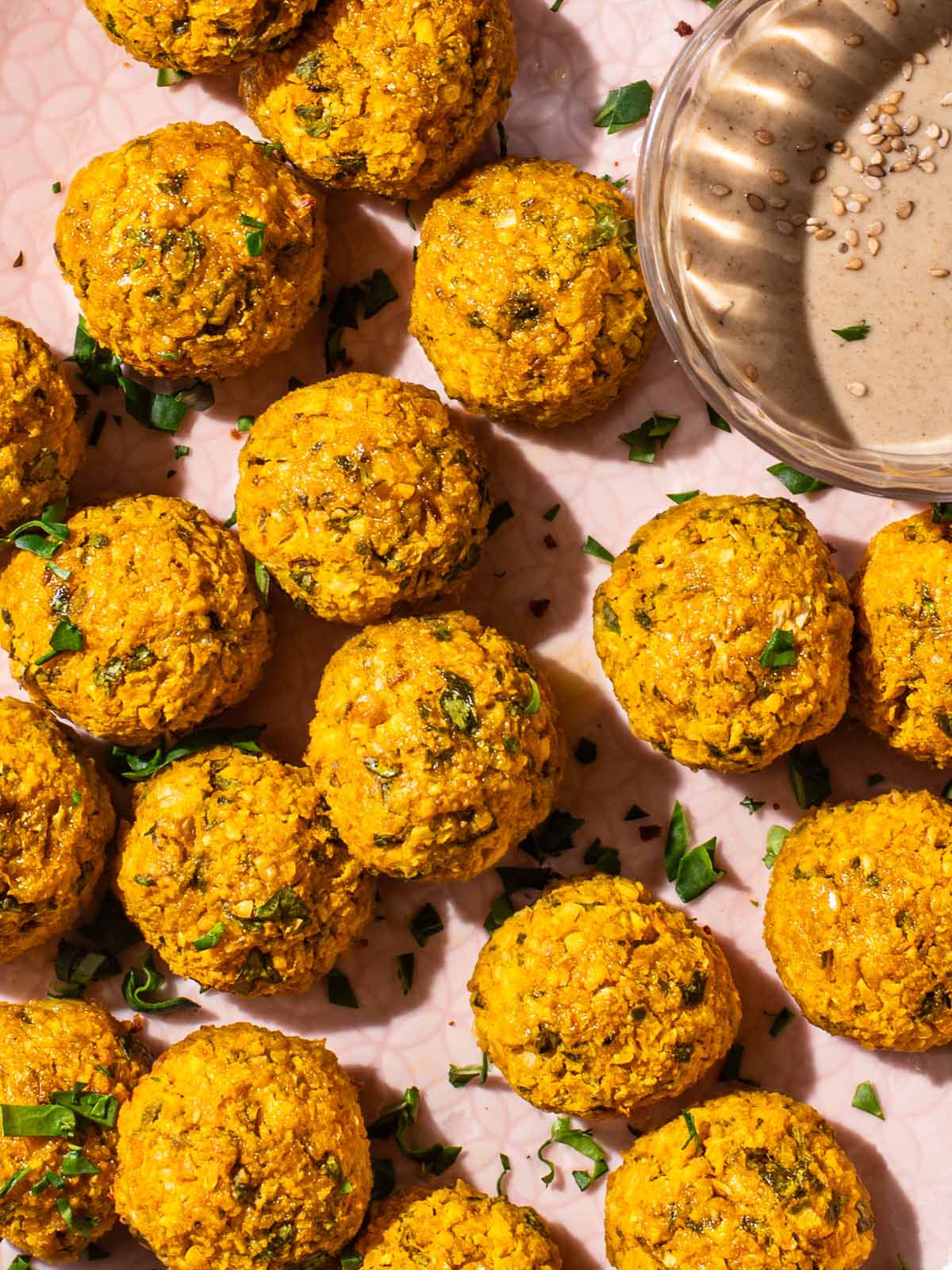
Chickpea Falafel with Winter Squash

This recipe for pumpkin falafel was originally served as part of a seasonal bowl with apples, beetroot, potatoes, and a tahini mustard dip. With this update I’ve not only improved the falafel recipe, but also now omitted the bowl instructions in the recipe card. Serving suggestions have been moved to the main post instead (see below) so that you can feel that there’s more flexibility in how to serve these.
The falafel are made with turmeric, ginger, apple cider vinegar instead of lemon juice, and oats. The result is a very flavourful patty that uses good seasonal ingredients. Falafel is usually fried but these little patties to get a crispy outer crust without using so much oil – I always think it’s such a waste to deep-fry. It’s far from traditional so think of it as an autumnal chickpea patty, with plenty of warming spices.
This recipe uses soaked chickpeas instead of canned and I really recommend that you stick to that instead of using a can of beans. I promise that, if you soak them for the full 24 hours, you won’t have the side effects that you’re thinking of and the texture is a million times better. These tend to get a little soggy with canned chickpeas, and dried are more budget friendly anyway.

I first shared this recipe in 2016. It’s been updated with improvements to the recipe instructions and a retested and improved recipe, new photos, including step-by-step photos, and more helpful information. This has been an autumn and winter staple recipe for us for the past decade and I’ve made several small changes over the years to improve it.
I don’t use affiliate links. Any links you see here are to other recipes or related information, not paid links.
Ingredients You’ll Need and Why
The focus here to is to use seasonal ingredients, and as usual to make an inexpensive and accessible recipe. Swap fresh herbs for dry, use canned or roasted pumpkin, and so on – see below for substitutions. These are my notes from recipe testing. You can find the full recipe card below with complete measurements and instructions.
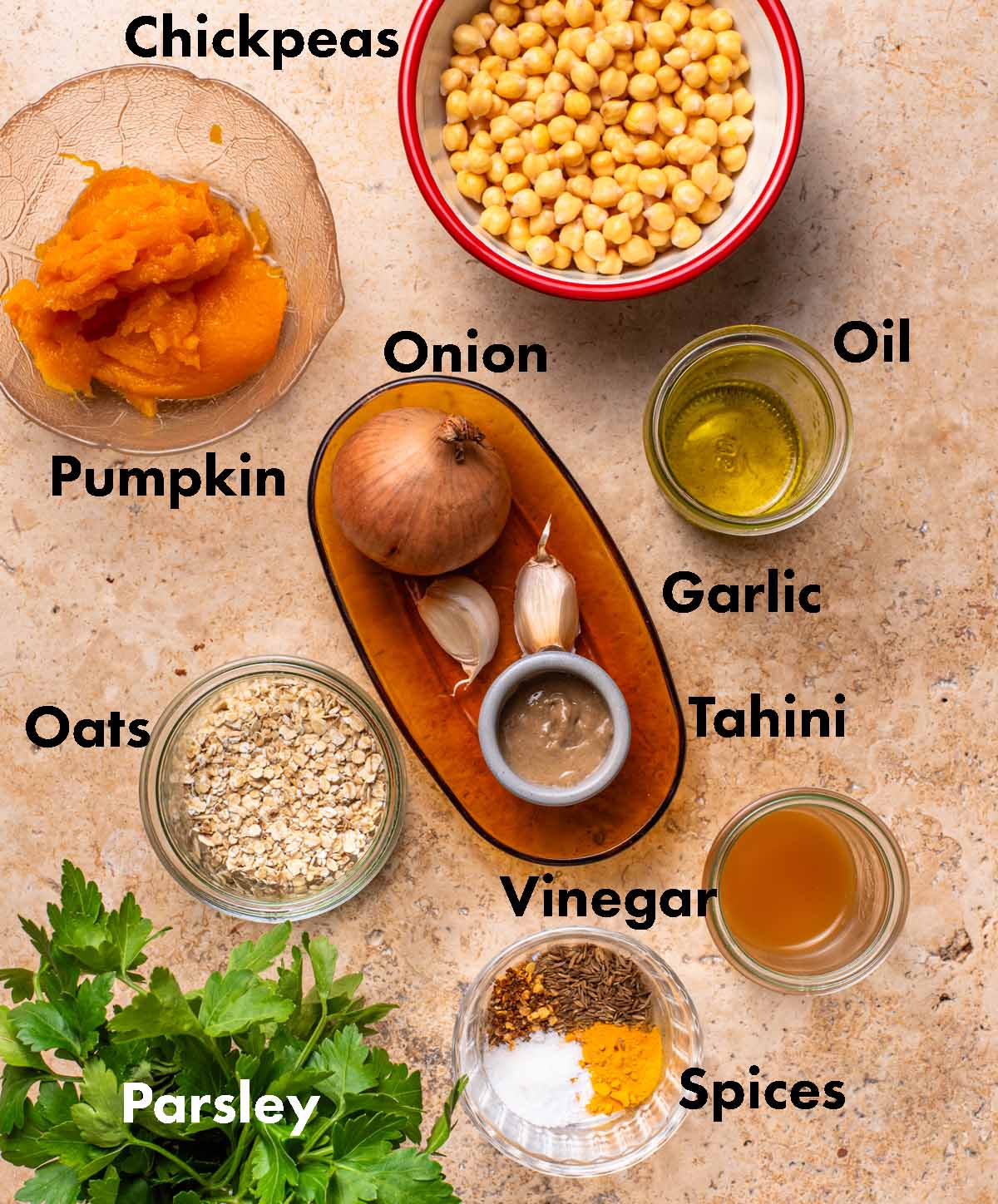
- Pumpkin: this can be any pumpkin or winter squash you like. I usually use Hokkaido or butternut as they’re the most easily available to me, but any will work. Canned pumpkin is a fine substitute but make sure it’s plain pumpkin puree and not pumpkin pie filling. Sweet potato is an excellent substitute.
- Chickpeas: dried chickpeas (garbanzo beans), not canned. While you can use other legumes, like in these red lentil falafel, I haven’t tried this particular recipe with lentils and can’t advise on that.
- Onion: the onion is not cooked before mixing in to the falafel dough. If you’re very sensitive to onion – remember that it will cook in the oven – you could try cooking it until softened before mixing.
- Oats: use certified gluten-free oats if necessary. Oats provide structure, helping to bind the mixture. They’ll soak up some moisture while the mixture chills before shaping. I prefer the texture of quick-cook oats (rolled oats are a little big) but you can also blitz rolled oats in a mini food processor.
- Parsley: this grows well into autumn, so it’s my go-to during cooler months. Sub fresh coriander (cilantro), frozen parsley, or use a couple teaspoons of dried parsley, coriander, or dill. See parsley substitutes.
- Spices: cumin, turmeric, hot pepper, salt, and pepper. A curry powder blend can be subbed if you’d like. The turmeric can be omitted for a slightly more traditional tasting falafel.
- Vinegar: it simply needs to be something acidic to balance out the flavours, and apple cider vinegar is a great shelf-stable option. Lemon juice is the best substitute.
- Tahini: for moisture, flavour, and binding power. The best substitute for tahini is sunflower seed butter, which we use a lot for a more budget-friendly alternative.
- Oil: don’t skip the oil, the falafel will be dry and crumbly without it. I always use olive oil but use your preferred cooking oil. I don’t recommend an oil or fat that’s solid at room temperature.
How to Make Pumpkin Falafel
You will need a food processor for this recipe. I use a mini food processor that attaches to an immersion blender, which is great for just about any recipe and takes up much less space than a standard food processor.
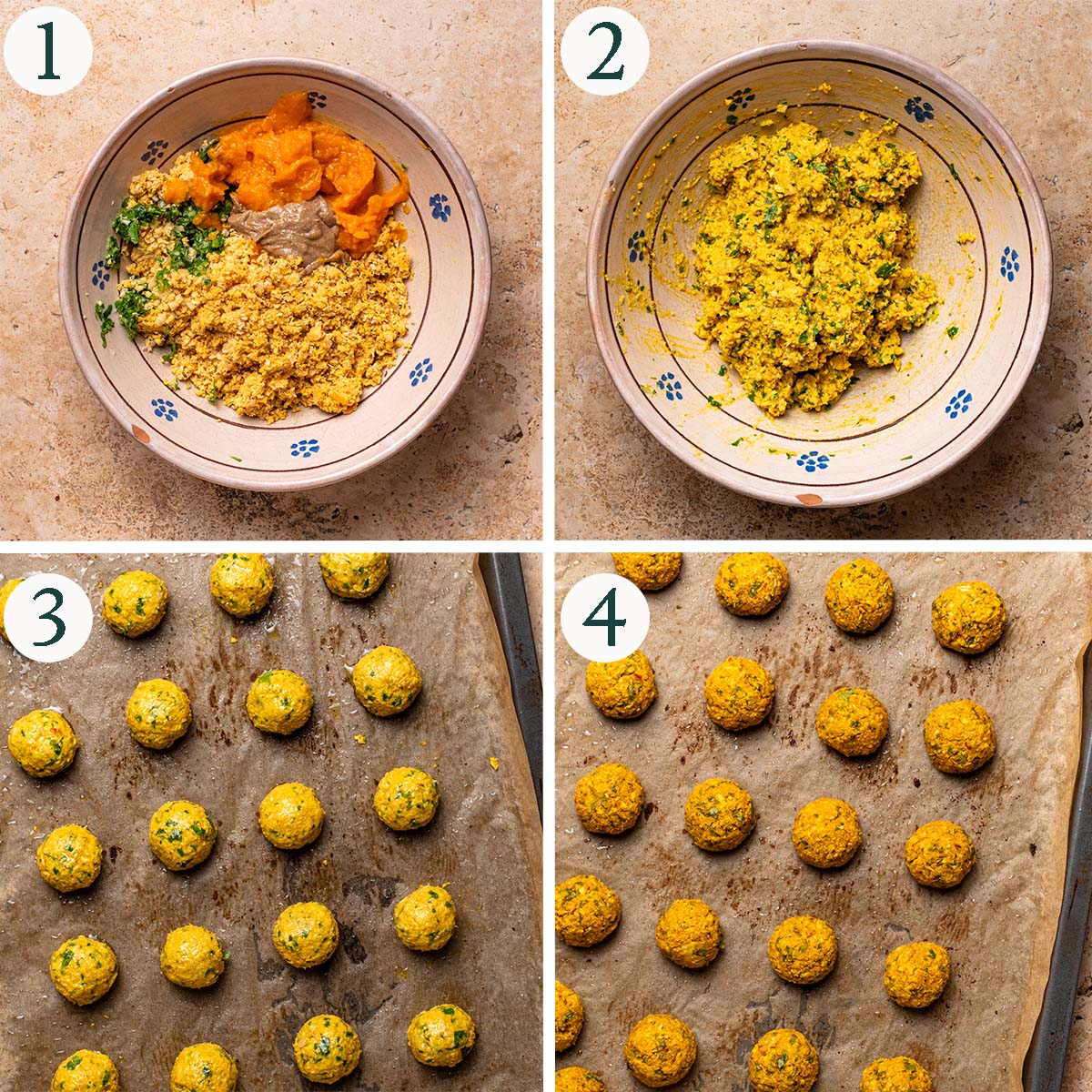
Step 1: blend the chickpeas, oats, onion, parsley, and spices until the chickpeas have broken down into small pieces. You shouldn’t have any whole chickpeas but it won’t form a paste. It should be a crumbly mixture. Add to a mixing bowl with the pumpkin and tahini.
Step 2: mix to combine into a rough mixture that holds together when pressed. You can do this in the food processor if you have a standard countertop machine. I find it a bit easier to mix and scoop out from a bowl, but it comes down to whether you’re okay with dirtying more dishes.
Step 3: chill for at least an hour before scooping the chilled mixture, about one tablespoon each, and rolling into balls. It shouldn’t be very sticky, but it can help to rinse your hands periodically.
Step 4: brush the balls with a small amount of oil and bake for about 25 minutes, until golden. The baking time reflects that these are made with soaked chickpeas, rather than canned, and they do need time to cook through. Don’t worry – the pumpkin and tahini keep them from drying out.
Expert Tips for the Best Falafel
- Soak the chickpeas in advance: I usually soak them the night before when I’m making dinner so that I don’t forget to do it. Refrigerate if your home is warm.
- Chill before shaping: this makes it possible to shape the falafel into balls. The dough is too soft before chilling and the mixture tends to fall apart instead of rolling easily.
- Brush with oil: this is a nod to deep frying, and makes for a slightly more crisp outer layer on the falafel.
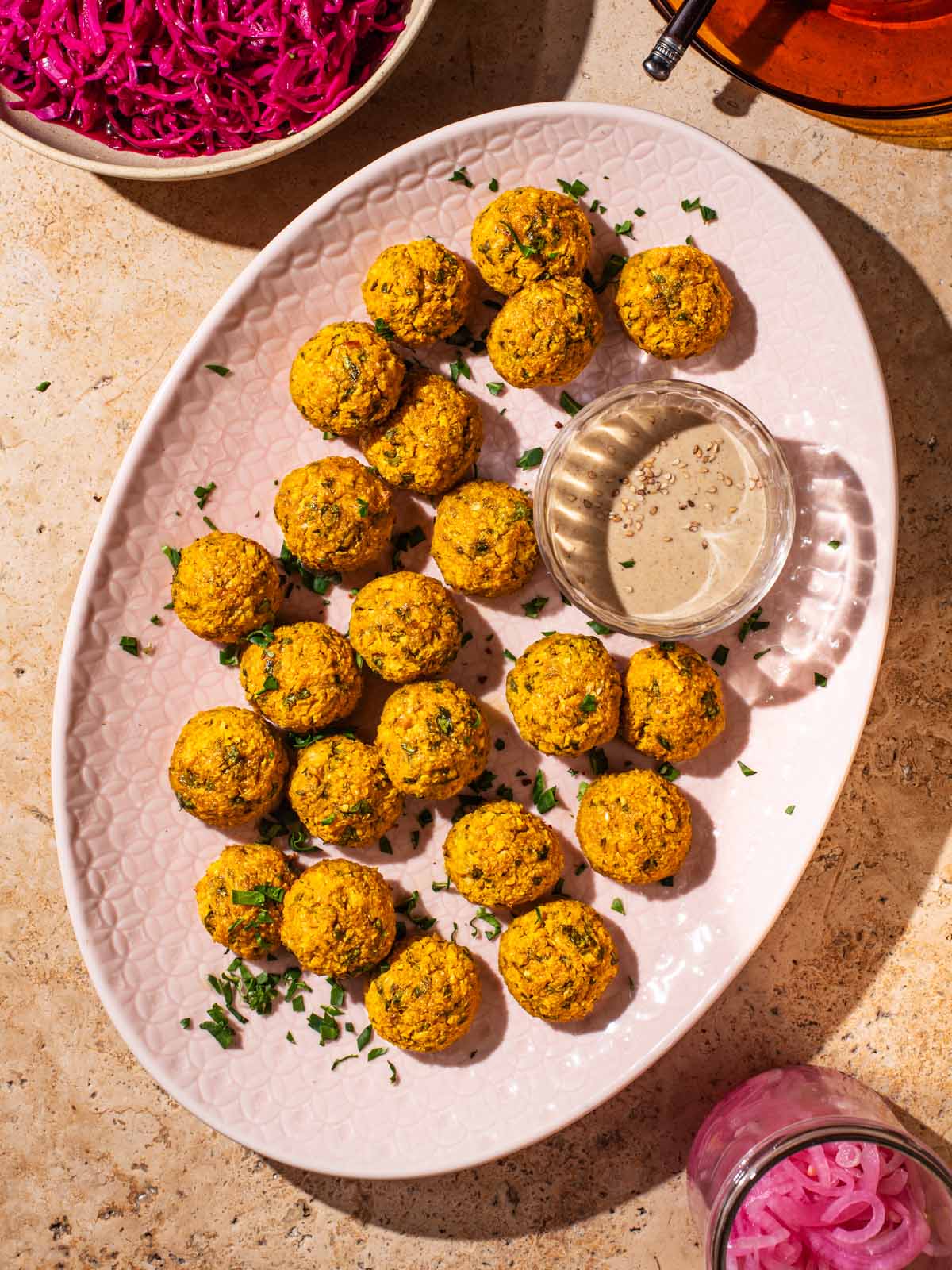
Serving Suggestions
- Serve with a spicy or garlicky dip, like spicy hummus, tahini garlic sauce (my favourite and what’s pictured), avocado aioli, or go all out with the theme and do a pumpkin chickpea dip.
- Try as part of a grain bowl like these roasted cauliflower bowls. When I first shared this recipe it was in a bowl with roasted beetroot and potatoes with apple, avocado, and pomegranate. Try a handful of greens like baby spinach and any seasonal roasted vegetables.
- Try in a wrap or with flatbread – see red lentil falafel and spelt naan or spelt pita.
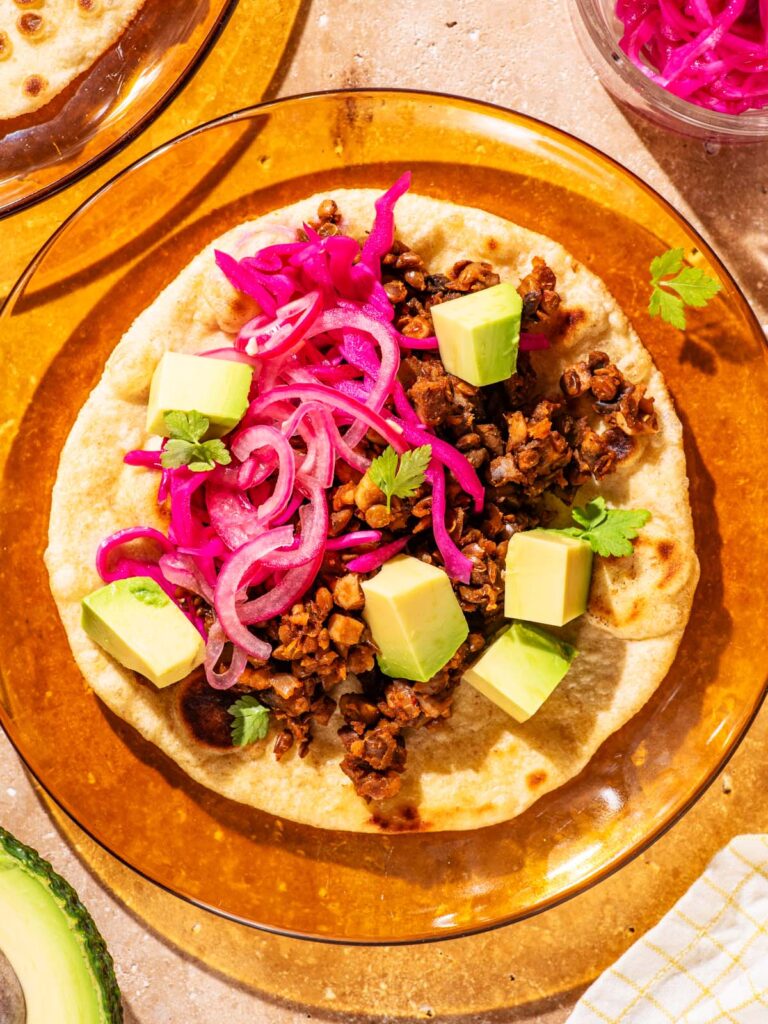
- Pair with something sharp, like the pickled red cabbage and pickled onion as pictured.
More Winter Squash Recipes
- Vegan Butternut Squash Mac and Cheese – one of my favourite autumn recipes, instead of vegan cheese, cashews, or nutritional yeast, this recipe uses hummus to get that cheesy flavour.
- Vegan Pumpkin Cinnamon Rolls – a perfect autumn dessert, made with less sugar but still plenty of pumpkin spice flavour.
- Pumpkin Red Lentil Curry – a thick, filling, meal in a bowl kind of dinner with no need for any extras. No rice or bread needed. Big chunks of pumpkin are the star here.
- Pumpkin Baked Oats – soft and muffin-like, with no banana, and with warming autumn spices and maple syrup.
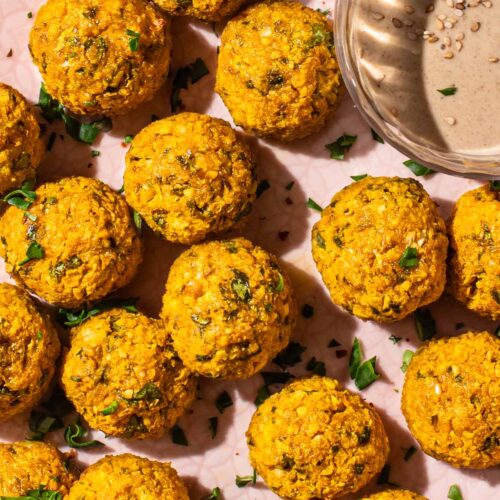
Baked Pumpkin Falafel
Description
Ingredients
- 200 grams (1 ½ cups) dried chickpeas soaked for 24 hours beforehand
- 1 bunch parsley large stems removed
- ⅓ cup quick-cook oats
- 1 medium onion
- 3 cloves garlic
- ½ teaspoon turmeric
- ½ teaspoon cumin
- ½ teaspoon sea salt
- ½ teaspoon black pepper
- ¼ teaspoon hot pepper flakes optional, to taste
- 150 grams (⅔ cup) pumpkin puree
- 2 tablespoons olive oil
- 2 tablespoons tahini
- 1 tablespoon apple cider vinegar
Instructions
- Drain and rinse the soaked chickpeas. Transfer to a food processor. Add the parsley, oats, onion, garlic, turmeric, cumin, salt, pepper, and hot pepper.200 grams (1 ½ cups) dried chickpeas, 1 bunch parsley, ⅓ cup quick-cook oats, 1 medium onion, 3 cloves garlic, ½ teaspoon turmeric, ½ teaspoon cumin, ½ teaspoon sea salt, ½ teaspoon black pepper, ¼ teaspoon hot pepper flakes
- Blend until the chickpeas have broken down and the mixture is crumbly, with no whole chickpeas visible.
- Transfer to a large mixing bowl and add the pumpkin puree, oil, tahini, and vinegar. Mix to combine.150 grams (⅔ cup) pumpkin puree, 2 tablespoons olive oil, 2 tablespoons tahini, 1 tablespoon apple cider vinegar
- Cover and refrigerate for at least an hour, or up to 12 hours.
- After chilling, preheat the oven to 200°C (400°F) and line a large baking sheet with parchment paper.
- Using a spoon, scoop the chilled falafel mixture, about one tablespoon each, and roll into balls. Rinse your hands periodically to prevent sticking. Place the falafel onto the prepared baking sheet. You should have about 22 falafel.
- Use a pastry brush to brush each ball with a small amount of oil.
- Bake for 20 to 25 minutes, until lightly golden. Serve immediately with any desired toppings and dips.
Notes
Nutrition
Nutrition is provided as a courtesy and is an estimate. If this information is important to you, please have it verified independently.
I just finished making the tahini mustard dip to have ready in the morning when I make the falafel. I think I could eat this dip by itself it is so delicious! It’s going to be a new recipe I am going to be obsessed with. Thank you.
Hi,
It looks delicious. I wanted to know if you can use canned pumpkin instead of the fresh butternut squash. If yes, how much of a 15 oz can should be used?
Thanks
Hi Rachel, I would measure out a cup of the canned puree and that should be fine. Hope that helps!
Hi, how many servings does this recipe make? 🙂
2-4, depending on how hungry you are!
Hey! Thank you so much for this! Just wandering: we use dried and raw(!) chicpeas, so they cook in the oven? We don’t have to cook them first?
Hi Milou! Yes, falafel is traditionally made with dried (soaked) chickpeas, rather than cooked. It makes for a lighter texture – though of course since these are baked rather than fried it’s a bit different – but they will cook in the oven : ) just make sure you soak for long enough beforehand.
Thanks!!
Hi, Just wondering if you soak 1 1/2 cups of dried chickpeas or soak 3/4 cup to get 1 1/2 cup because I know they expand….
Thanks! These look delicious!
Do you have to soak the chickpeas even if they are canned or is it only for dried chickpeas?
Hi April, these falafel are made with dried chickpeas. You can use canned, but you’ll probably have to add a little flour to keep them from being too wet.
I’m so happy to hear that, Nicki! Yes, butternut squash is winter squash, of which pumpkin is a type. You could use a different variety like sugar pie or Hokkaido if you’d like 🙂 whatever kind of pumpkin you have should work!
Dear Alexandra,
I love your blog. It has become my cooking bible.
I plan to make this tomorrow. Is there pumpkin in your pumpkin falafel?
Nicky
This looks so good! I like the combination of cooked and raw ingredients. Falafel is a favorite of mine but I always make them either to dense or to soft that they fall apart. I think baking them instead of frying them may help as well!
Oh MAN this looks amazing. I hope to recreate it myself soon — I've just pinned the recipe. Gorgeous flavours (and photos!) as always, Alexandra!
Such beautiful photos! I love the look of these little fritters. I can't wait to give this a try!
This bowl is absolutely beautiful and your pictures are amazing. I love the idea of adding winter squash to falafel (which I also love). I can't wait to try your version!