

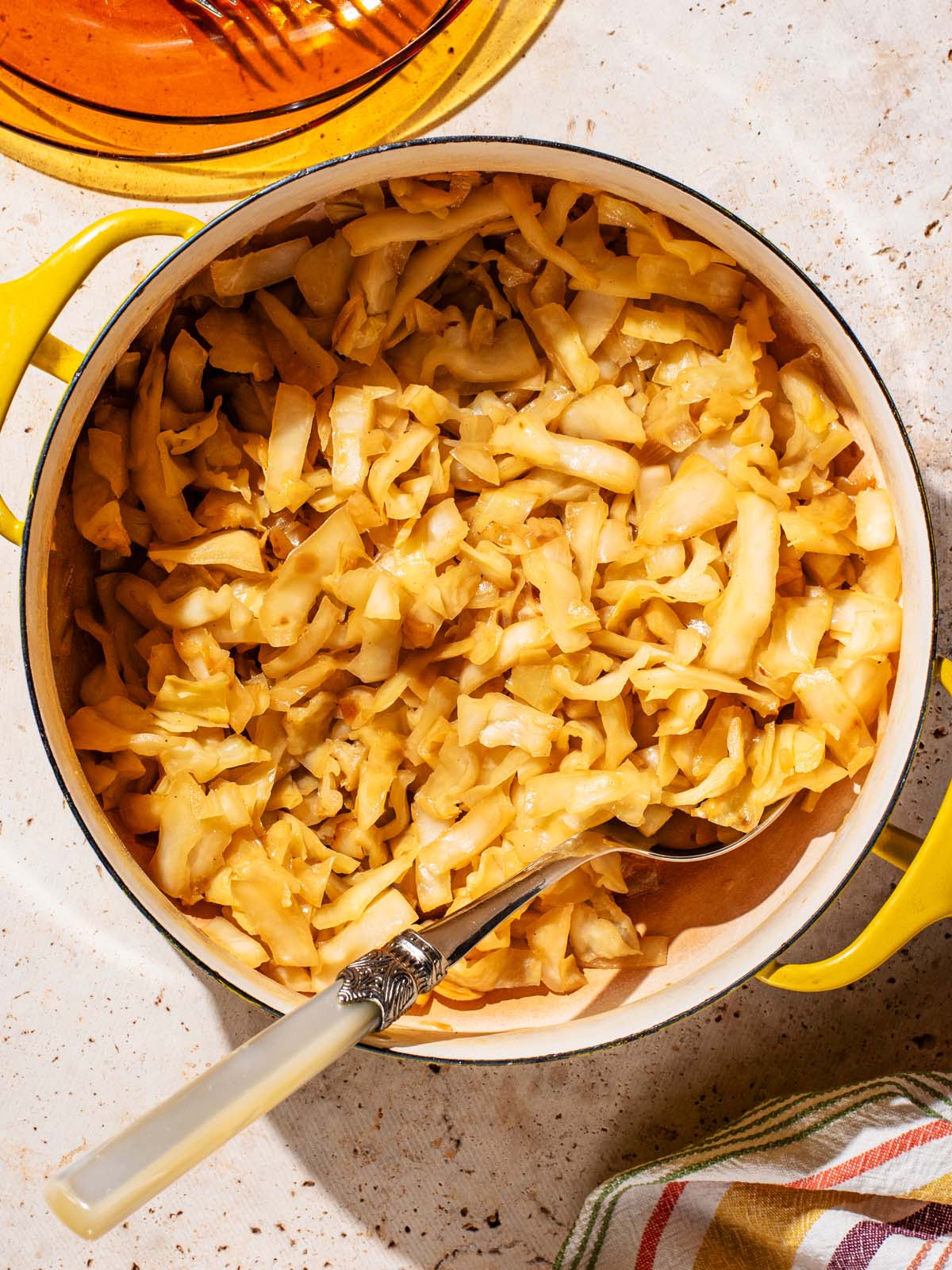
An Easy Way to Cook Cabbage

Cabbage is a real winter staple for us – we are definitely a cabbage household – and this sautéed cabbage with garlic, vinegar, mustard, and honey is a great easy way to prepare it. It holds onto a bit of crunch, not getting as soft as German cabbage, and needs much less time. It’s a sweet and sour dish that pairs well with any number of mains and something we have almost every day during the colder months.
You do need every element of this recipe for the cabbage to taste right. It should have a bright, savoury flavour with a strong mustard note. The garlic comes through and the vinegar is balanced by the addition of honey. The concept is similar to a warm salad, with the vinaigrette cooked right into the cabbage.
This is adapted from my sautéed red cabbage recipe, one of the most popular recipes on Occasionally Eggs, reaching thousands of readers every week. The quantities are slightly different to reflect the milder taste of white cabbage.

I don’t use affiliate links. Any links you see here are to other recipes or related information, not paid links.
Ingredients You’ll Need and Why
This is how we’ve been cooking cabbage for over a decade now, with simple staple ingredients that add real flavour. These are my notes from recipe testing. See below for the full recipe card with complete measurements and instructions.
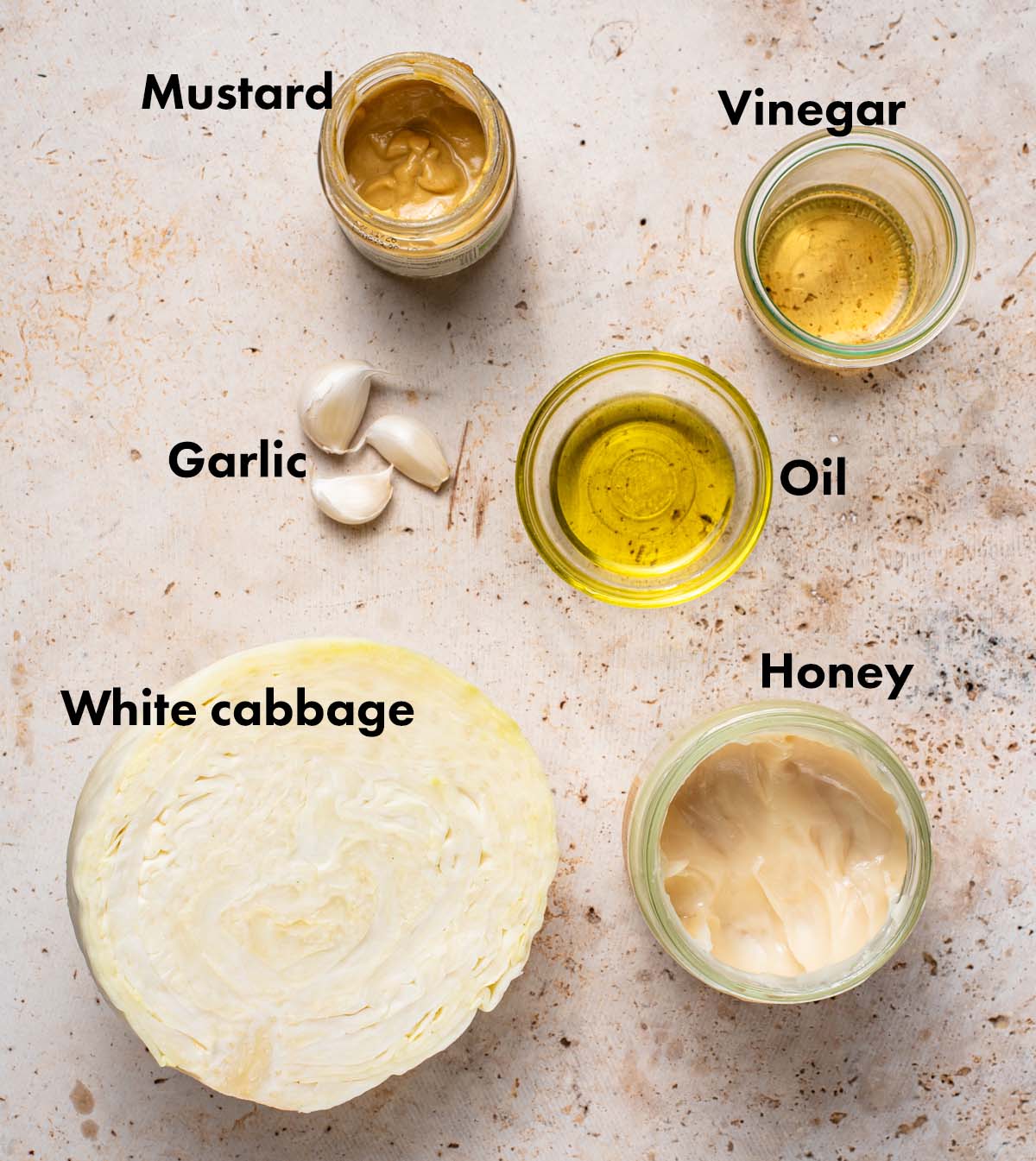
- Cabbage: this recipe is specifically developed for white cabbage. Choose a head of cabbage that feels heavy for its size and doesn’t have visible deep insect tracks. Shallow ones are fine and can be cut out.
- Garlic: there is no good substitute for garlic, and this is a fairly garlic-forward recipe. Use less or try elephant garlic if you’d like a milder flavour.
- Vinegar: for white cabbage it’s best to stick with apple cider vinegar, white wine vinegar, or white balsamic. Red balsamic vinegar isn’t as good and plain white vinegar is too strong and one-note.
- Mustard: choose a good Dijon mustard if possible. If not, a medium-spicy German mustard will work, but it won’t be as good. Don’t use yellow hotdog mustard.
- Honey: substitute maple syrup for a vegan option. I’ve never tried making this with sugar but I’m sure it would work.
- Oil: use your preferred cooking oil, but note that you’ll probably be able to taste it in the final dish. I always use olive oil.
How to Make Sautéed Cabbage
It really is as easy as it looks. It might take a little longer than you think, and look like it isn’t cooking down very quickly, but the cabbage needs time to get some caramelisation before adding the vinegar. Once that extra liquid is added, the cabbage quickly wilts and softens.
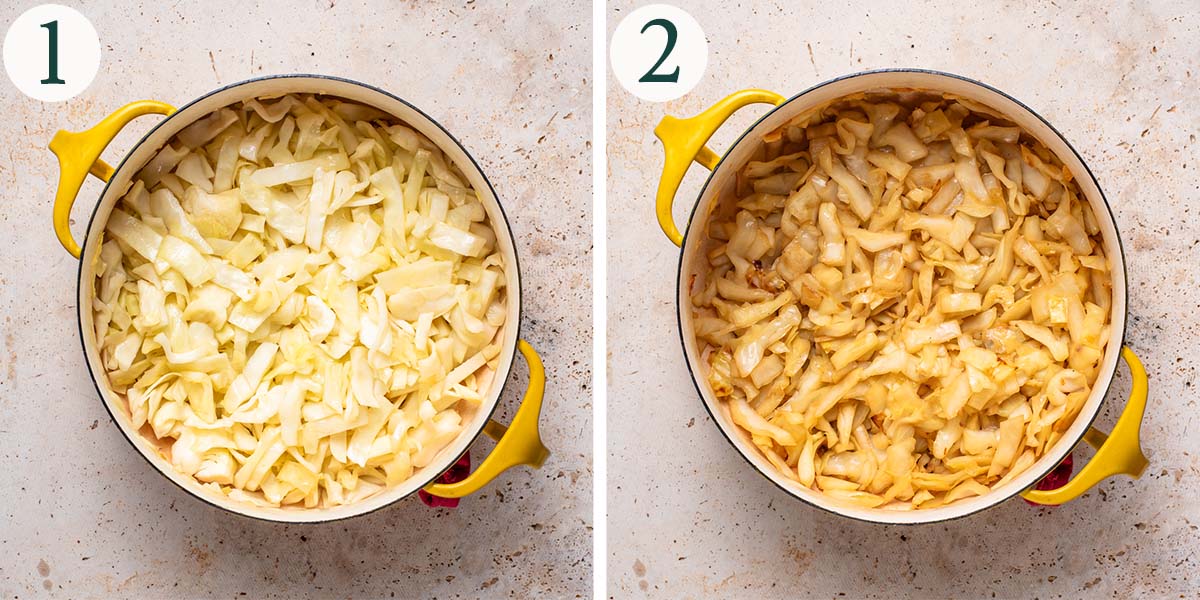
Step 1: preheat the pan before adding the sliced cabbage and cook for several minutes before adding the garlic. If you add the garlic too early, it might stick and burn because it’s cooking on medium heat. Cook for another few minutes after adding the garlic.
Step 2: add the honey, mustard, then stir in the vinegar, salt, and pepper. The vinegar will help to lift any pieces that might have stuck to the pan during cooking. Stir well to make sure nothing is sticking, and season to taste before serving.
Related: Cabbage Lentil Soup
Expert Tips for the Best White Cabbage
- Stick to white cabbage: use my other recipes for red cabbage and sautéed savoy cabbage if you want to use those types instead. Believe it or not, they do have different flavour profiles and cook differently.
- Season to taste: as with any savoury dish, this should be seasoned depending on your personal preference. Add more salt or pepper, increase the vinegar, and so on to suit your taste.
- Core well: make sure the core is completely removed from the cabbage before slicing it to avoid any hard pieces in your sautéed cabbage.
- How to core: to core a cabbage, you simply remove the very dense white part at the base with a knife. This is easier if you quarter the cabbage first, but it can be removed in a triangle shape from a halved cabbage once you get more accustomed to preparing cabbage. Remove any wilted leaves before use.
- Check the texture: the amount of time needed will vary depending on the size of your frying pan and how roughly chopped the cabbage is. It should be cooked through but still have some bite.
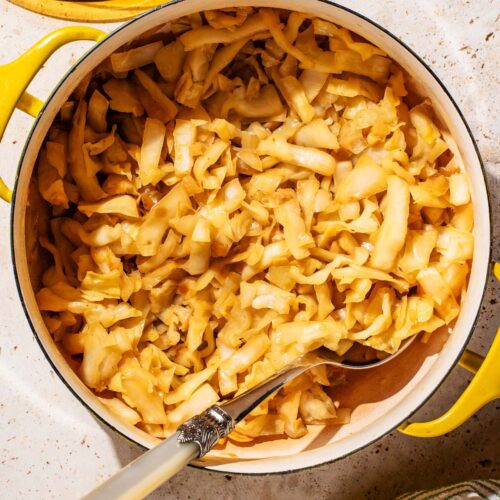
Sautéed Cabbage
Description
Ingredients
- 1 tablespoon oil
- ½ medium white cabbage ~500 grams (~18 oz.)
- 3 cloves garlic thinly sliced
- 2 teaspoons Dijon mustard
- 2 teaspoons honey or maple syrup
- ½ teaspoon sea salt to taste
- ½ teaspoon black pepper to taste
- 1 tablespoon apple cider vinegar or white balsamic vinegar, to taste
Instructions
- Heat a large frying pan over medium. While the pan is heating up, core and chop the cabbage.
- Once the pan is hot, add the oil and cabbage. Cook, covered, for 15 to 20 minutes, stirring occasionally. The cabbage should be starting to soften and have some golden edges.1 tablespoon oil, ½ medium white cabbage
- Add the garlic and cook for another 3 to 4 minutes, stirring occasionally to prevent sticking.3 cloves garlic
- Make a small well in the cabbage and add the mustard and honey to it. Stir to melts (this makes it easier to coat the cabbage), then add the salt and pepper and stir to combine.2 teaspoons Dijon mustard, 2 teaspoons honey, ½ teaspoon sea salt, ½ teaspoon black pepper
- Add the vinegar and stir well. The cabbage will quickly soften more as soon as the vinegar is added, so be careful not to over-cook now. Taste and adjust seasoning as needed. Serve hot.1 tablespoon apple cider vinegar
Notes
Nutrition
Nutrition is provided as a courtesy and is an estimate. If this information is important to you, please have it verified independently.
Baked Oats Without Banana
Mushroom Bourguignon
Walnut Energy Bites
Einkorn Banana Muffins
About Alexandra Daum
Alexandra Daum is a professional recipe developer, food photographer, and cookbook author. She started sharing carefully tested vegetarian recipes in 2014 and has since published hundreds of recipes with seasonal ingredients and whole grains as the focus. Her work has been featured on CTV, in House & Home and Chatelaine, on popular websites like Buzzfeed and Best Health, and in countless other publications.