

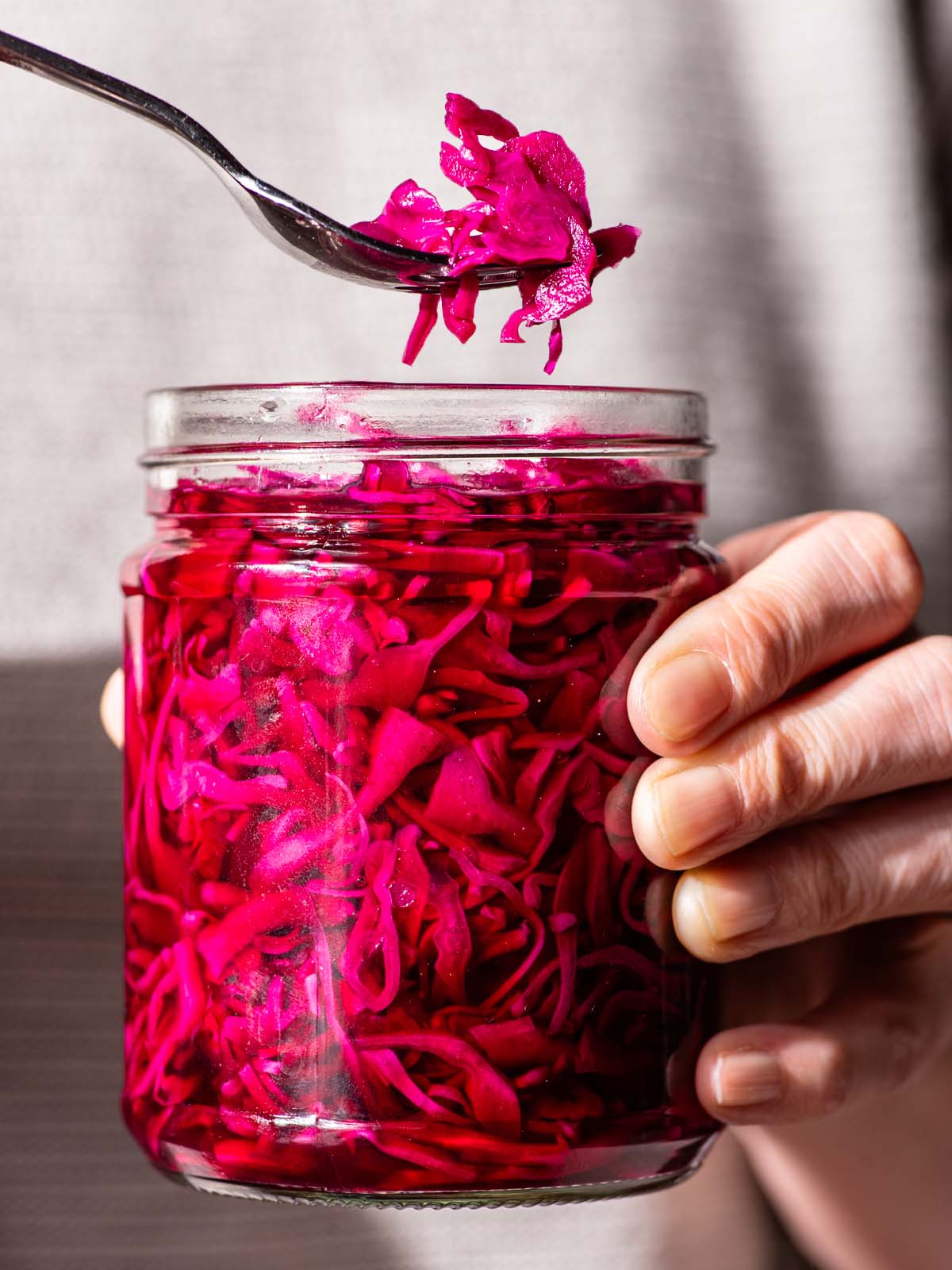
Quick Pickled Cabbage, a Refrigerator Staple

Like any quick pickle, pickled cabbage is a speedy side and topping you can make once and keep in the refrigerator for a couple weeks. It boosts every meal it comes into contact with – it adds crunch, acidity, and a beautiful colour to anything it touches. There’s no need for a full canning process here and this recipe is ready in minutes.
You need just a quarter of a red cabbage, some vinegar, coriander seed, water, honey, and salt for this recipe. It’s a bit flexible, and you can use different spices, replace honey with sugar, or try a different type of vinegar. Any substitutions are outlined below.
If you like pickled onions or pickled beets, then this is right up your alley and you can add it to the pink pickles shelf in your fridge (which I don’t have, but it would be nice).

I don’t use affiliate links. Any links you see here are to other recipes or related information, not paid links.
Ingredients You’ll Need and Why
It really is that simple: just six total ingredients, including water and salt. Unlike my pickled onions, this recipe does use a hot vinegar mixture for a faster pickle. These are my notes from recipe testing – I’ve been making this for decades – and you can find the full recipe card below with complete measurements and instructions.
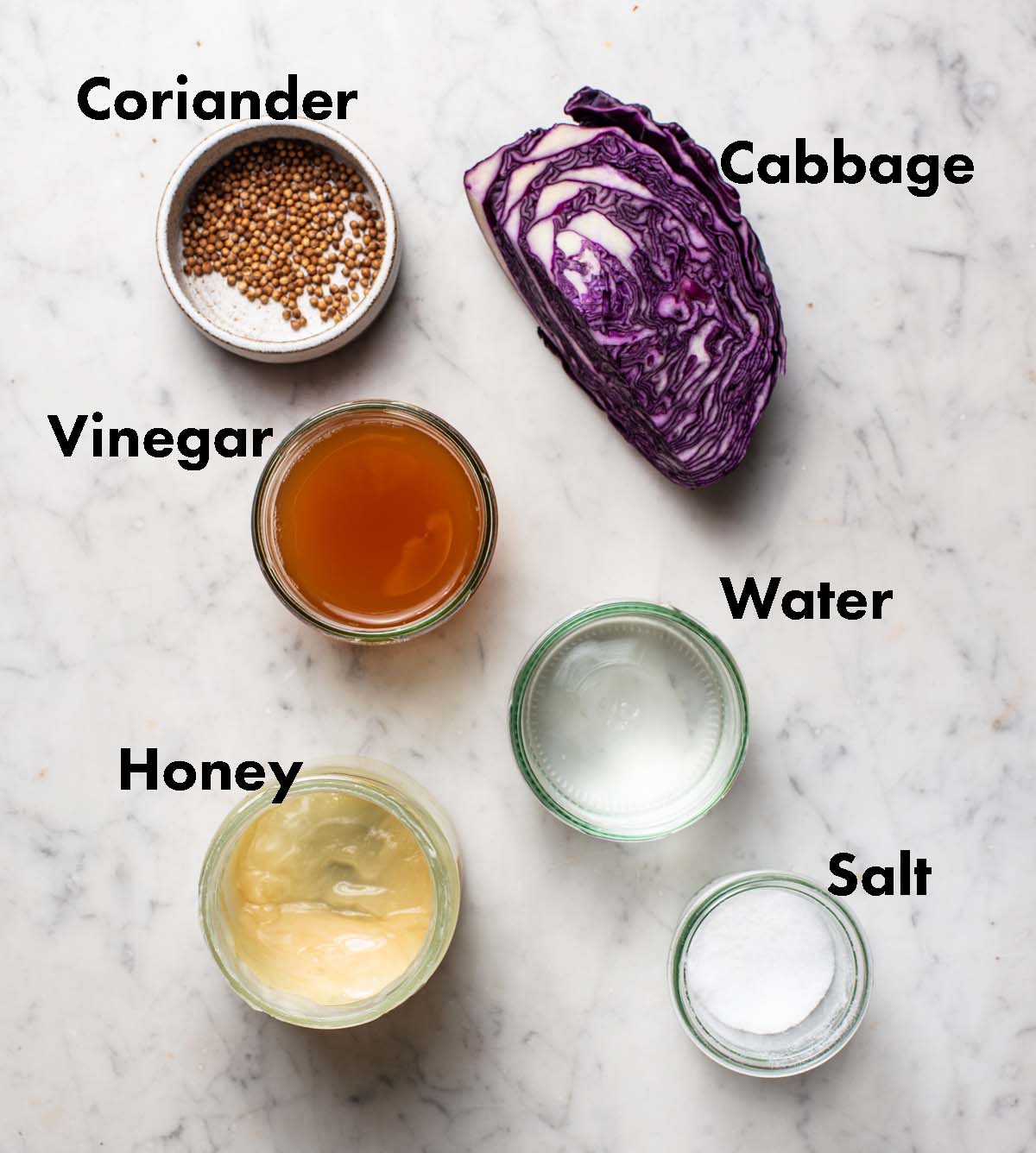
- Red cabbage: when buying any cabbage, choose one that feels heavy for its size, but is on the smaller size for this type. The leaves should be bright and crisp. White cabbage can be subbed for red if that’s what you have. The only real difference will be in colour.
- Vinegar: apple cider vinegar is best. A lower acidity white vinegar or white wine vinegar, at 5%, can replace it.
- Coriander: this is optional and can be omitted if you want a very simple version. Peppercorns, cumin seed, caraway, or fennel seed are all good substitutions. Try adding bay leaves or other spices to the jar too.
- Honey: don’t skip the sweetener. Without it, the pickled cabbage is one-note, pure vinegar. If you don’t eat honey then I recommend using twice the amount of sugar rather than maple syrup.
- Water: there not enough liquid without it, and the pickle is too vinegary.
- Salt: not only for flavour, salt also acts as an additional preservative in the brine. If you choose to reduce the salt note that your pickle probably won’t last as long before spoiling.
How to Make Pickled Red Cabbage
This can be made in a few minutes and will be even faster if you slice the cabbage in a food processor. The cabbage needs to rest for about an hour after the vinegar mixture is added, so keep that in mind.
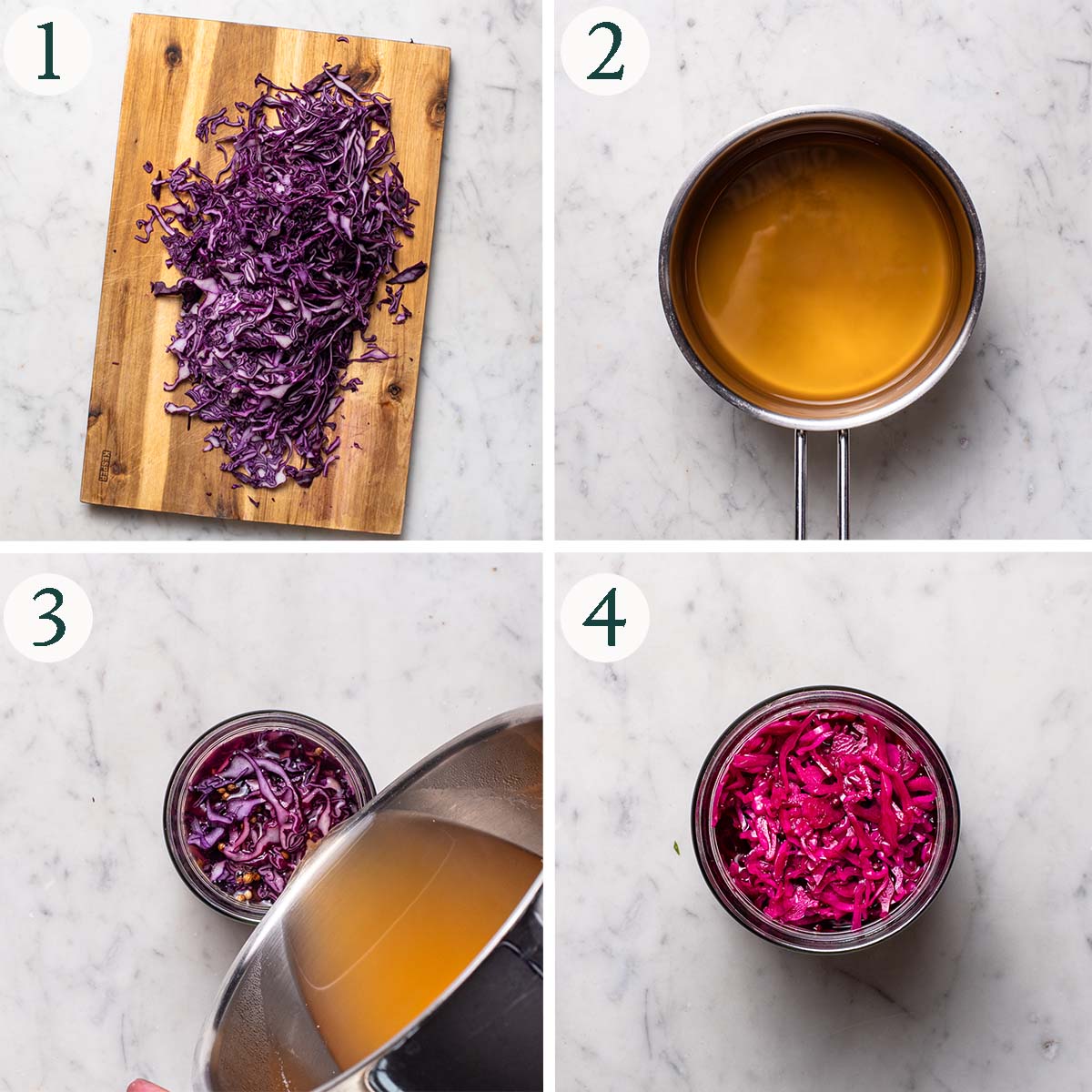
Step 1: core and slice the cabbage very finely, either by hand or with the slicing attachment on a food processor. The slicing side of a box grater can also be used.
Step 2: heat the vinegar, water, honey, and salt in a small saucepan. Because the cabbage is raw, heating the liquid makes for a better end texture than a cold pickle. It’s crunchy but not waxy like raw cabbage can sometimes be.
Step 3: place the sliced cabbage and coriander seed or other spice(s) into a 500ml canning jar and pour the hot liquid over top. You must use a heat-safe jar for this recipe and a canning jar is the easiest option. A glass jar that’s not heat-safe might crack.
Step 4: set aside to rest for at least an hour before serving. The cabbage will completely change colour, to an even bright pink shade, while it rests. Refrigerate for a couple of weeks.
How to Serve Pickled Cabbage
- Try as a topping on any veggie burgers. I particularly like it with lentil burgers and black bean burgers.
- Serve with any vegetarian tacos, like these roasted cauliflower tacos, or in a burrito.
- Top your grain bowls or burrito bowls.
- Add to sandwiches, salads, and more. It’s often served as a sushi side in Sweden.
Expert Tips for the Best Pickled Cabbage
- Keep it covered: make sure the cabbage is submerged in liquid during storage, or the parts exposed to air will start to spoil.
- Rest before serving: it needs some time to fully pickle and reach the ideal texture. After an hour, it’s perfect, and it’ll just keep getting better over the next week or so.
- Don’t can this recipe: this is a quick pickle, or refrigerator pickle, and is not safe to preserve for longer periods outside of the refrigerator. I would not recommend trying to can the cabbage.
- If substituting sugar: honey is generally twice as sweet as sugar. If you’re going to use plain sugar, double the amount by volume for the same level of sweetness.
More Cabbage Recipes
We eat a lot of cabbage, almost every day, and these are my top cabbage recipes using this versatile vegetable, with recipes for both cooked and raw options.
Quick Pickled Cabbage
Description
Ingredients
- ¼ medium red cabbage ~ 200 grams (7 oz.)
- 1 teaspoon coriander seed
- 120 ml apple cider vinegar
- 120 ml water
- 1 tablespoon honey or 2 tablespoons sugar
- 1 teaspoon sea salt
Instructions
- Sterilise one or two heat-safe canning jars and set aside. You'll need a 500ml (17 oz.) jar or two smaller jars.
- Very thinly slice the cabbage with a sharp knife, the slicing attachment on your food processor, or the slicing side of a box grater. Set aside.¼ medium red cabbage
- Place the coriander seed in the bottom of the jar(s). Add any other spices you'd like to use at this point.1 teaspoon coriander seed
- Mix the vinegar, water, honey, and salt together in a small saucepan. Heat over medium high until it starts to simmer, and whisk to dissolve the salt.120 ml apple cider vinegar, 120 ml water, 1 tablespoon honey, 1 teaspoon sea salt
- Pour the hot vinegar mixture over the cabbage. Set aside to rest for one hour before serving. Store for up to two weeks.
Notes
Nutrition
Nutrition is provided as a courtesy and is an estimate. If this information is important to you, please have it verified independently.
Apple Cinnamon Oatmeal
Oatmeal Peanut Butter Energy Balls
Carrot Cake Baked Oats
Easy Roasted Sunflower Seed Butter
About Alexandra Daum
Alexandra Daum is a professional recipe developer, food photographer, and cookbook author. She started sharing carefully tested vegetarian recipes in 2014 and has since published hundreds of recipes with seasonal ingredients and whole grains as the focus. Her work has been featured on CTV, in House & Home and Chatelaine, on popular websites like Buzzfeed and Best Health, and in countless other publications.