

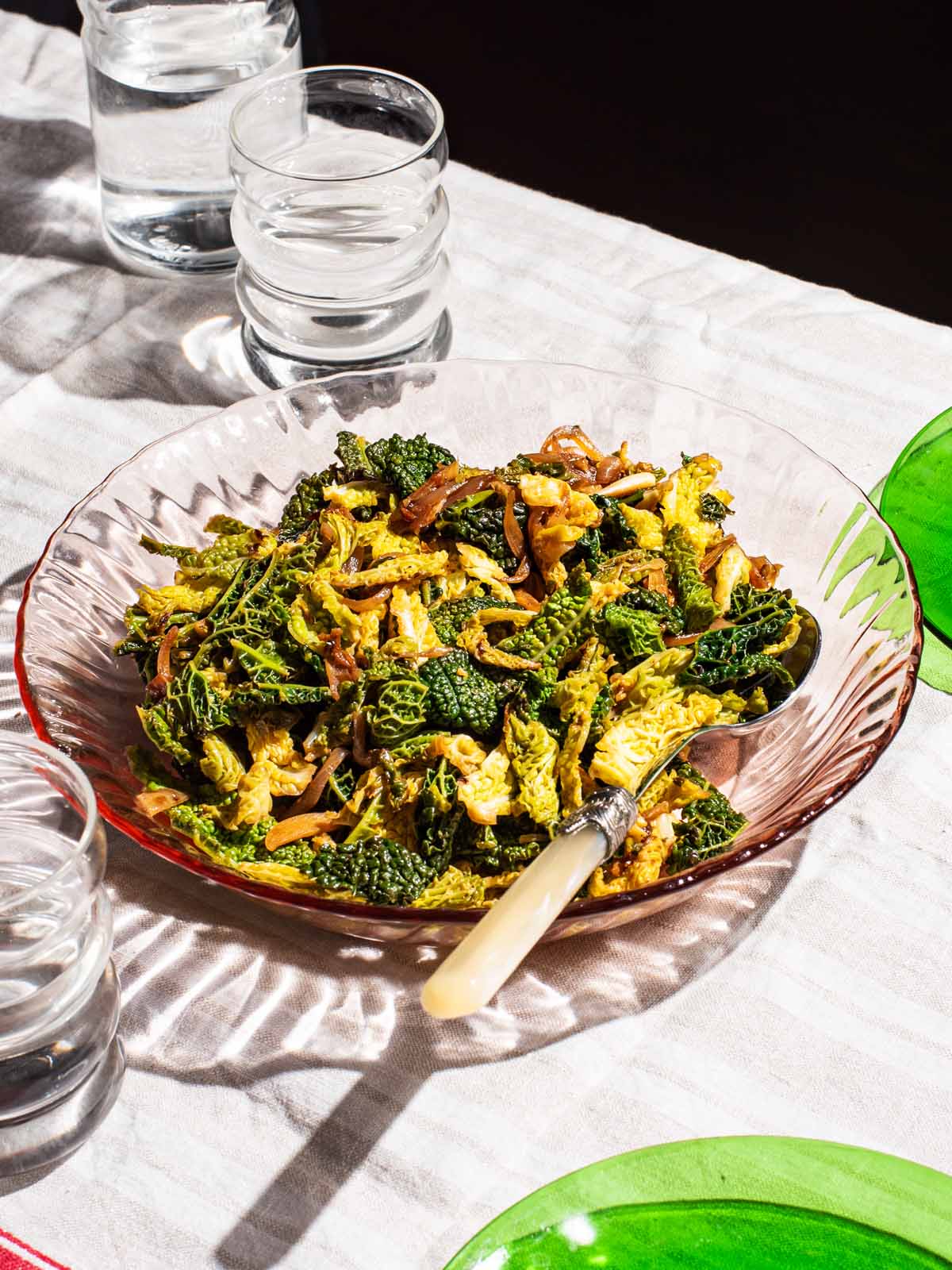
A Staple Savoy Cabbage Recipe

As a lifelong passionate cabbage eater, I am happy to tell you that this is a very good way to cook savoy cabbage. This cabbage (Wirsing) has a slightly softer texture and sweeter flavour than white and red cabbage, with crinkly leaves that soften more easily during cooking. It’s very similar to lacinato kale.
My version of sautéed savoy cabbage uses onions, garlic, and white wine, without cream or caraway. Optional caraway seed is included in the recipe card if you like it. It’s still fairly traditional and I’m drawing on both French and German cooking styles, but omitting mustard and any cream or vegetable broth. German recipes often call for the cabbage to be cooked in broth, which softens it too much and ruins the texture.
The best way to cook cabbage is in its own liquid, and you’ll see this in my other cabbage recipes too (see sautéed red cabbage). We make cabbage dishes almost every day for at least six months of the year – it grows and stores so well in Northern Europe – and like to change up the methods to keep it from being too much of the same.

I don’t use affiliate links. Any links you see here are to other recipes or related information, not paid links.
Ingredients You’ll Need and Why
With just six total ingredients and a couple optional add-ins, it’s a very simple recipe that allows the cabbage to shine. These are my notes from recipe testing, and you can find the full recipe card below with complete measurements and instructions.
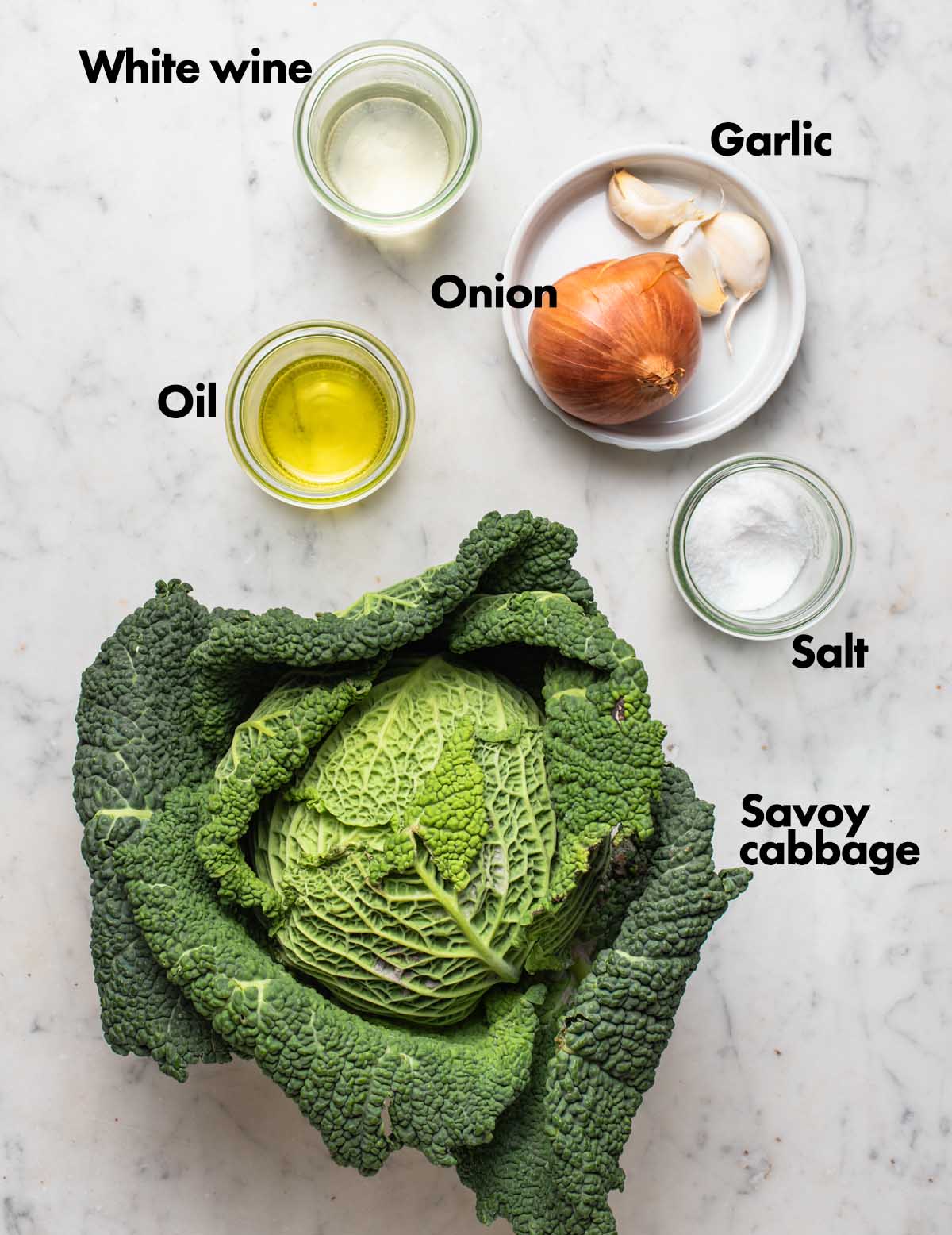
- Cabbage: this should be a firm head of cabbage that feels heavy for its size, with tightly packed inner leaves. You’ll get the best taste and texture this way. Savoy cabbage will always have loose outer leaves. Try to avoid heads with visible deep insect holes but don’t worry if the outer leaves have been nibbled on.
- Oil: I use olive oil, but you can choose your preferred cooking oil. I don’t recommend something too strongly flavoured, like virgin coconut oil.
- Onion: white or red onion, but note that red onion has an unpleasant appearance in this recipe. Both taste good. The onion is cooked for a few minutes before adding the cabbage to get some light caramelisation.
- Garlic: a few cloves of garlic add a big flavour boost without overwhelming the cabbage. It shouldn’t taste strongly of garlic but rather the garlic should complement the cabbage.
- Wine: a dry white wine with a high acidity is preferable here. Ask at the liquor store and they’ll be able to help you find an acidic dry white. I only use wine for cooking so I always need to carefully read the labels or ask in-store! Substitute half the amount of white wine vinegar if preferred.
- Salt: season to taste, as always. If the cabbage tastes flat but seems to have enough salt, add a squeeze of lemon juice rather than more salt.
How to Cook Savoy Cabbage
As with any cabbage, you should discard the outermost leaves, which are more to protect the cabbage than to be eaten. To core a cabbage, you simply remove the very dense white part at the base with a knife. This is easier if you quarter it first.
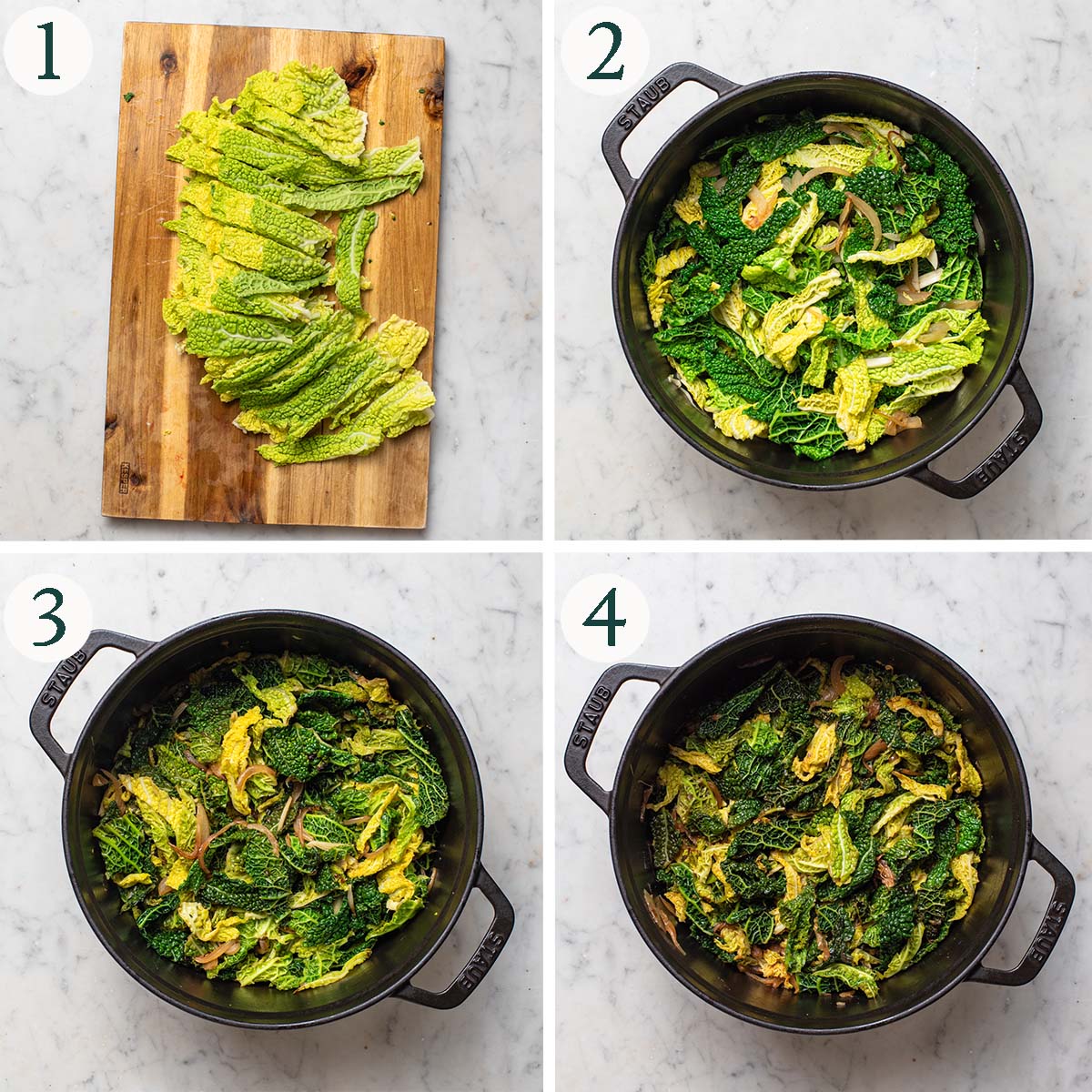
Step 1: slice the onion and start cooking it while you prepare the cabbage and garlic. Take the outer leaves of the cabbage, quarter it, remove the core, and cut into strips. The outermost leaves of cabbages should generally be discarded. Think of them as natural packaging.
Step 2: cook the onion for five minutes, then add the cabbage and garlic. Don’t be tempted to increase the heat, which will burn the garlic and onion.
Related: Roasted Red Cabbage
Step 3: cook the cabbage for another 15 minutes, stirring frequently to prevent sticking. While this is difficult to express in recipe cards, you should ideally add salt as you cook, rather than only once during the cooking time – seasoning in layers makes for more flavourful food.
Step 4: deglaze with the wine and cook for a few more minutes before tasting, adjusting the seasoning, and serving. Deglazing dissolves any fond, the browned bits in the pan, and incorporates it back into the dish for a more complex taste.
Expert Tips for the Best Cabbage
- Don’t overcook: it’s best not to cook the cabbage too long, unless you want it to be very soft, and this isn’t that kind of recipe. A quicker cook makes for crisp edges and a just-right texture.
- Season to taste: consider the amount of added salt to be a guideline, and adjust it based on personal preference. You may also need to add another acid note if your wine isn’t acidic enough. Try a splash of lemon juice or a very small amount of white wine vinegar if needed.
- Adjust cooking time: if you cut your cabbage in much larger or smaller pieces, use a smaller pot or a very large pan, or your stove runs hot or cold – any of these changes will result in a different cooking time. Check the cabbage and stop cooking once it’s reached your desired texture if you do make changes like these.
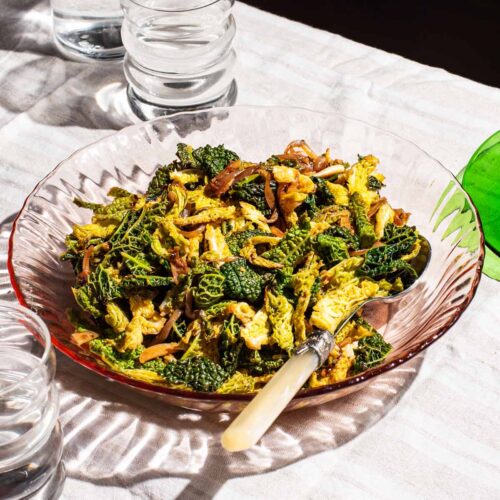
Sautéed Savoy Cabbage
Description
Ingredients
- 1 tablespoon oil
- 1 medium onion halved and thinly sliced
- 1 head savoy cabbage ~600 grams (21 oz.)
- 3 cloves garlic thinly sliced
- 1 teaspoon sea salt to taste
- ½ teaspoon caraway seed optional
- ½ teaspoon black pepper to taste
- 3 tablespoons dry white wine or 1 tablespoon white wine vinegar
Instructions
- In a large, heavy-bottomed pan, heat the oil over low-medium heat.1 tablespoon oil
- Once hot, add the onion and cook for five minutes, stirring occasionally.1 medium onion
- Remove the outer leaves of the cabbage and discard. Quarter the cabbage and remove the core. Thinly slice the leaves.1 head savoy cabbage
- Add the sliced cabbage and garlic to the pot with the onion and cook for another 15 minutes, stirring often to prevent sticking. Season with salt as it cooks.3 cloves garlic, 1 teaspoon sea salt
- Add the caraway, if using, and black pepper. Deglaze with wine, stirring well, and cook for another 3 to 4 minutes.½ teaspoon caraway seed, ½ teaspoon black pepper, 3 tablespoons dry white wine
- Season to taste and serve hot.
Notes
Nutrition
Nutrition is provided as a courtesy and is an estimate. If this information is important to you, please have it verified independently.

Very good! The only modification I made was to add a tablespoon of butter to the oil. I thought the 1/2 tsp of caraway seed was the right amount as well as the 3 tbspns of wine.
Good to hear, thanks Mark!