
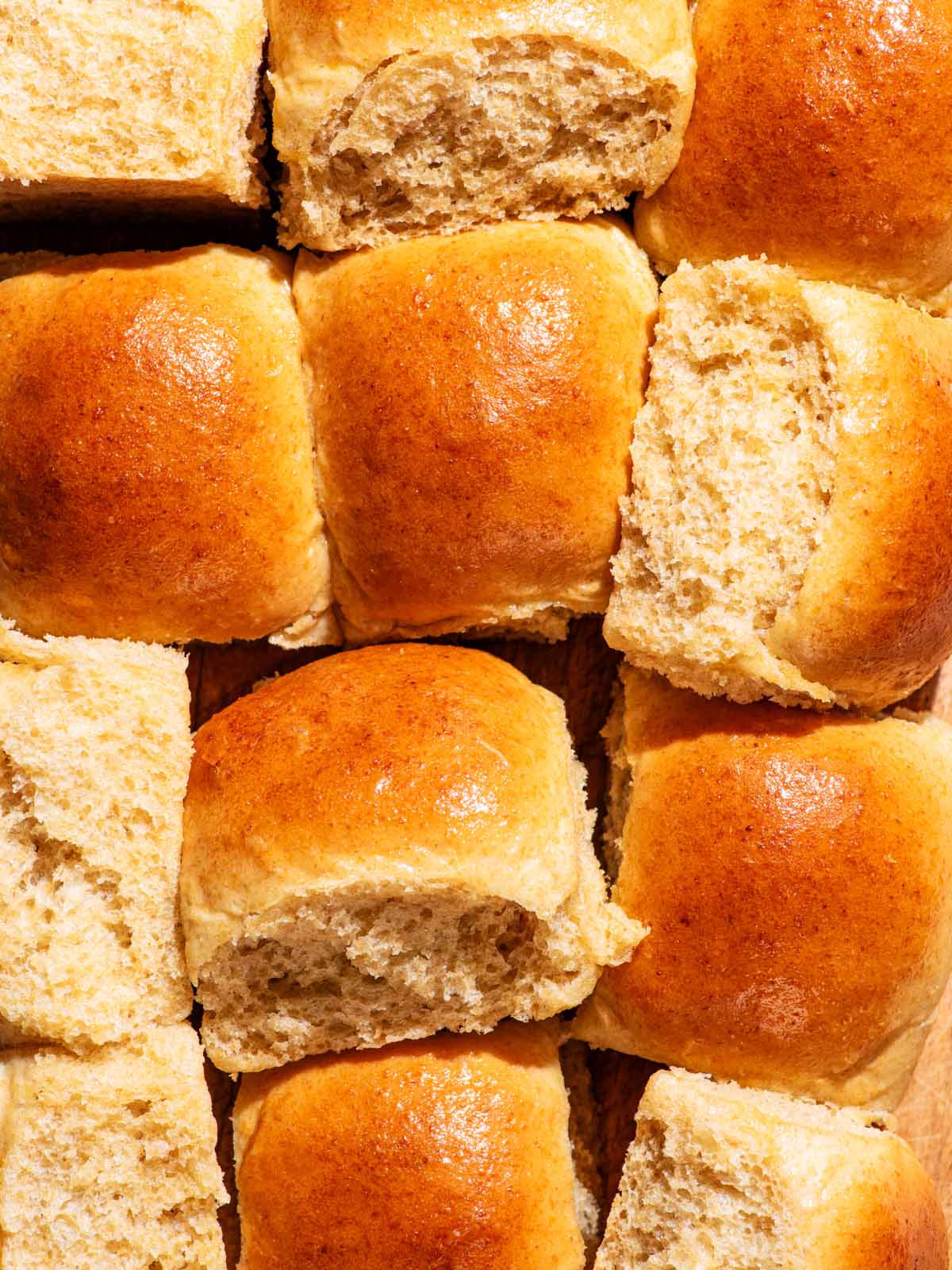
Einkorn Buns Without Wheat Flour

I bake a lot with einkorn flour, and make a lot of dinner rolls, so of course a recipe for einkorn dinner rolls was the next step! We have dinner rolls with every special occasion meal and I make them with various ancient grains each time. My spelt dinner rolls are a more traditional recipe, with all light spelt flour, but I personally prefer the flavour with some whole grain flour in the mix.
It’s easier than you think to bake with whole grains, especially with slightly enriched doughs like this, which are very easy to handle. You might be surprised by how soft, light, and fluffy these rolls are despite being made with about 40% whole grain flour and 60% spelt flour. The flavour is phenomenal.
You can use store-bought or home-milled flour for this recipe with no changes needed. The idea that amounts need to change when home-milling comes from measuring with cups, and when you measure with much more accurate weights, it’s a non-issue. All of my recipes are tested grams-first.

I don’t use affiliate links. Any links you see here are to other recipes or related information, not paid links.
Ingredients You’ll Need and Why
This is a lightly enriched dough, with milk replacing water and some oil and honey added to the dough. The buns aren’t particularly sweet but they do have a light sweetness like any dinner roll. These are my notes from recipe testing. You can find the full recipe card below with complete measurements and instructions.
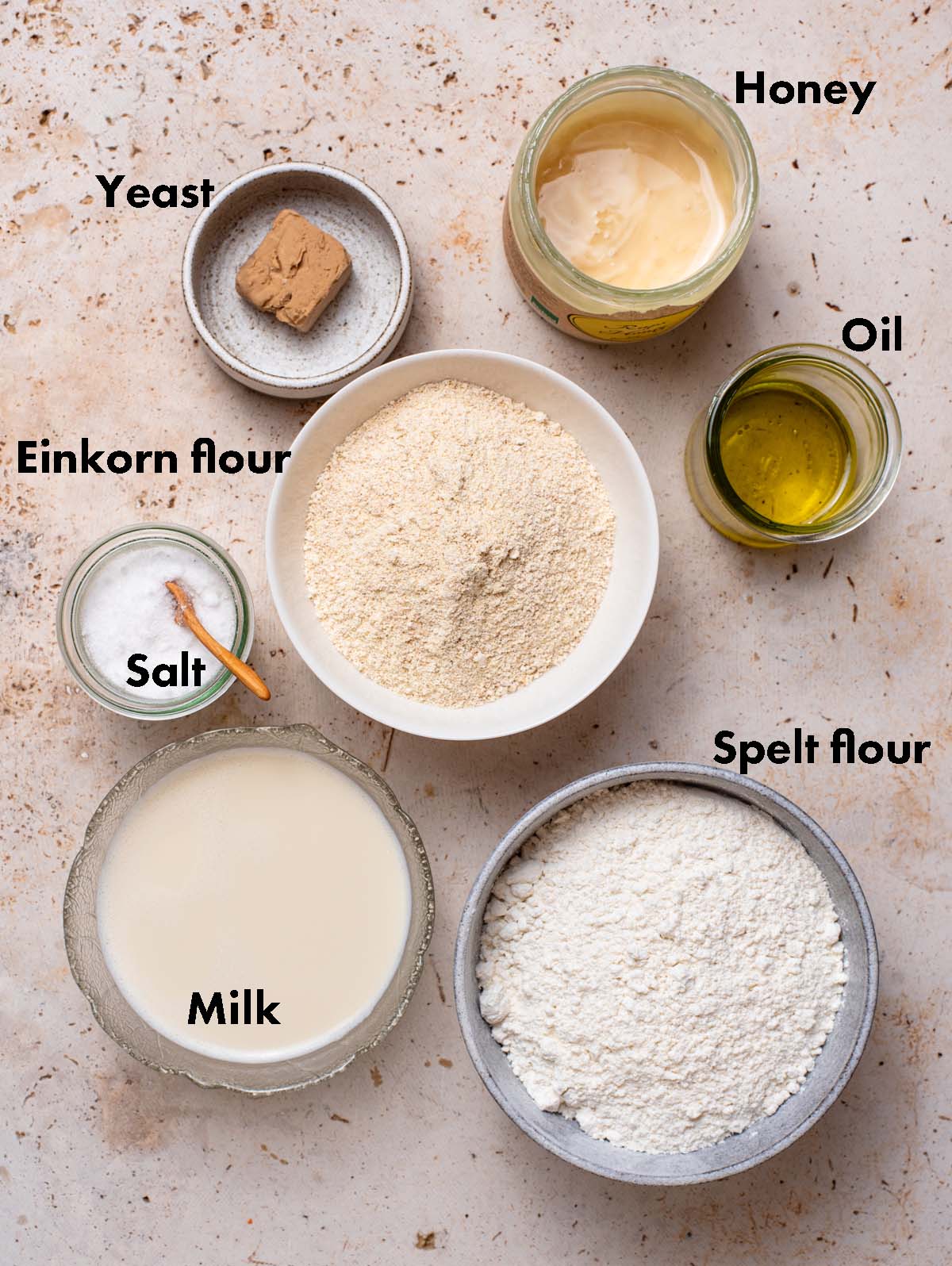
- Einkorn flour: this should be whole grain einkorn flour. This is an einkorn-specific recipe and I haven’t tested it with other types of flour. Pictured is home-milled einkorn flour, but I have tested with store-bought and it works just as well. I haven’t tested with sifted einkorn flour and all of my einkorn recipes are whole grain (see einkorn cookies and einkorn bread).
- Spelt flour: use light spelt flour, also called sifted or white spelt flour. Whole grain spelt can be used – you can also make these with 100% whole grain einkorn flour – but the texture will be much denser and heavier.
- Milk: I always use non-dairy milk due to an allergy and recommend soya, which has a higher protein content and is better for bread baking. Dairy milk can of course be used and will also make for a stronger dough. Other non-dairy milks like oat milk can be used in a pinch.
- Yeast: pictured is fresh yeast, which I use because it’s cheaper than dry where I live and also because I prefer the taste. The recipe card calls for dry or fresh yeast and I’ve included amounts for both. As written, the recipe should be made with traditional or active yeast – the blooming step isn’t necessary for modern yeast, but it helps to know that your yeast is still active before continuing. If using instant yeast, it should be added with the flour.
- Oil: olive oil is great and adds a good flavour to the buns. Use your preferred oil. I haven’t tested these with butter but I’m sure it would be fine. Oil does generally make for a slightly softer texture.
- Honey: to sweeten the buns. Substitute real maple syrup if you want a fully vegan dough. I haven’t tested with sugar.
- Salt: change the amount of salt added to bread dough at your own risk, as it plays an important role in gluten development. I always use fine sea salt.
How to Make Einkorn Rolls
This dough will look a little different than dinner roll dough made with only sifted flour, and quite different from dough made with conventional wheat flour. It will be slightly stickier at first, more likely to tear, and can over-prove quickly. If it’s your first time making this recipe read through the instructions carefully and use these images as a helpful guide to compare to.
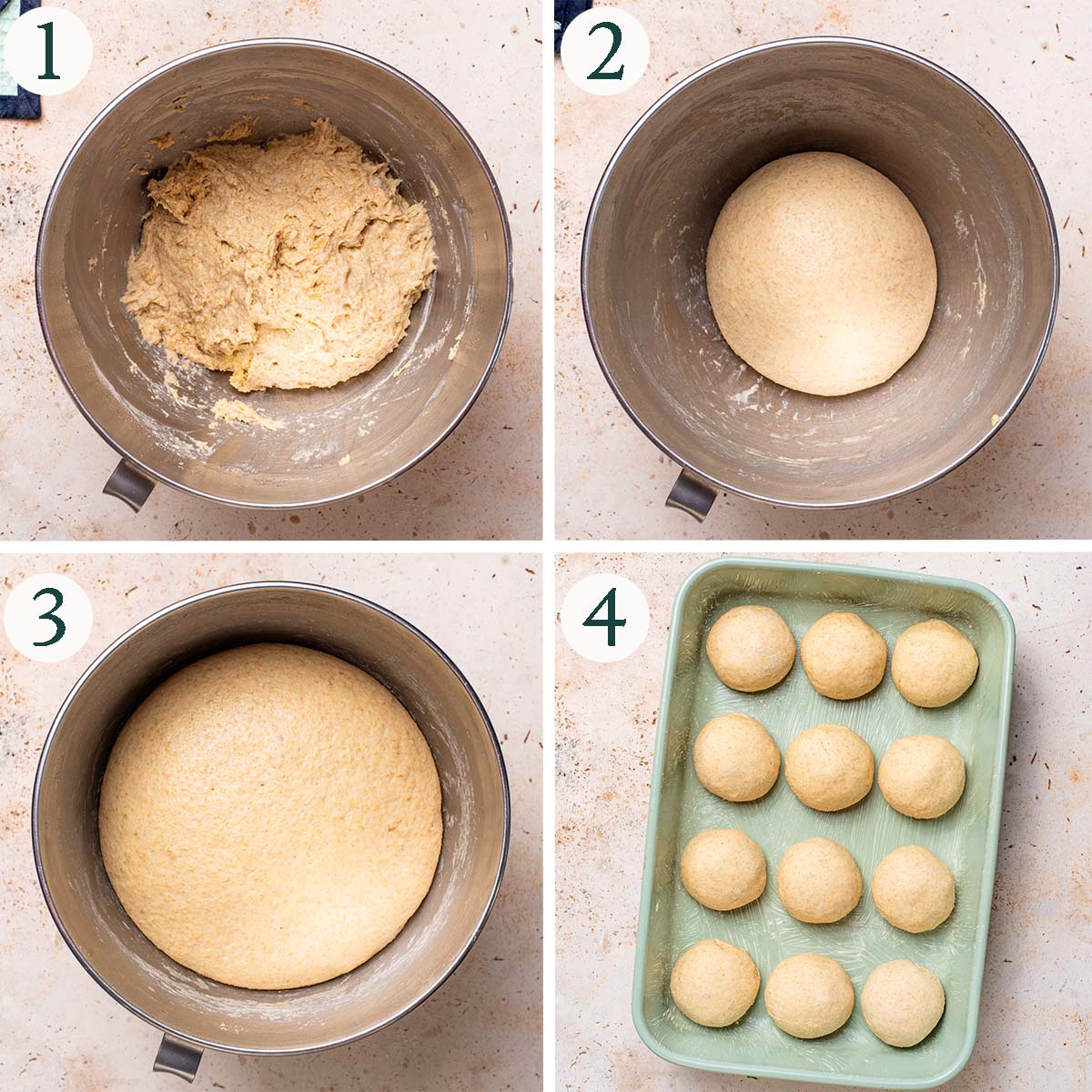
Step 1: whisk the honey and yeast into the warm milk and set aside to bloom, then stir in the remaining ingredients. The dough should be shaggy and will seem too wet at first. Set it aside to hydrate for ten minutes before starting to knead. The flour needs to absorb some of the liquid.
Step 2: knead the dough into a soft, smooth ball, stopping every couple of minutes to let the dough hydrate before continuing. You’ll notice that the dough comes together much more easily, tearing less and forming a ball more quickly, each time it rests.
Step 3: set aside to rise, tightly covered, until doubled in size. I cover the bowl with a tea towel and a large plate to make it almost airtight without plastic. If your home is very dry, dampen the tea towel first to prevent a dry skin from forming on the top of the dough, which interferes with the rise.
Step 4: divide the dough into 12 equal pieces, weighing if you want them to be exactly the same, and form into buns. See this video (timestamped) for information on how to properly shape dinner rolls. Place into a greased baking dish.
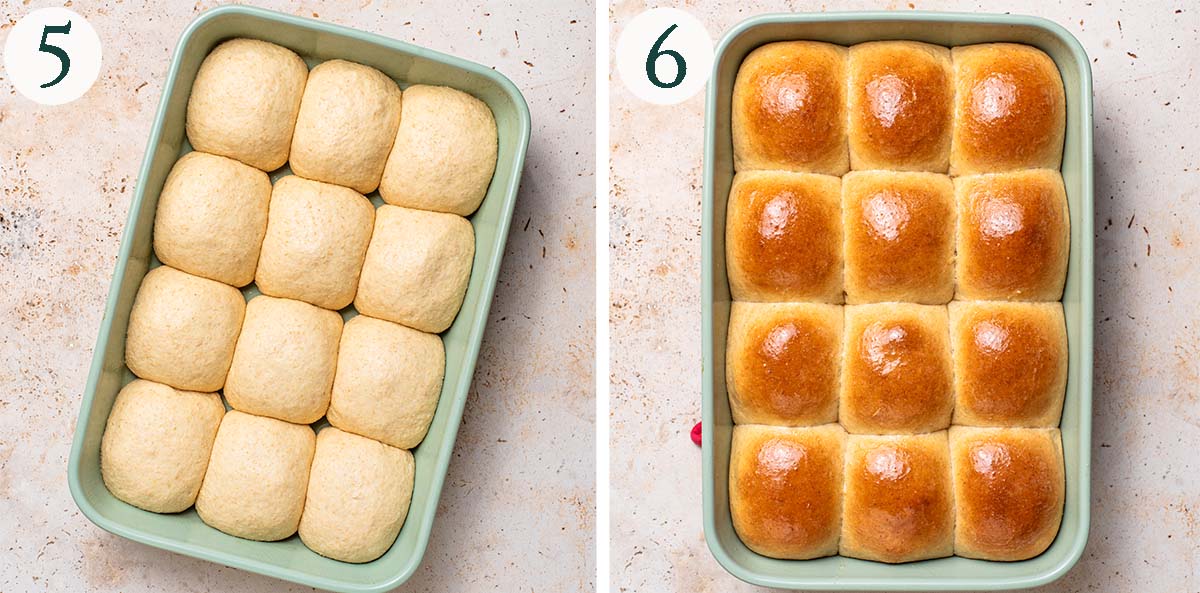
Step 5: cover again and let the buns rise until almost doubled in size. Covering for the second rise without drying out the buns can be slightly trickier. I sometimes use a large baking sheet, inverted over top, but that only works if the baking dish is deep enough. A damp tea towel can be risky as it does sometimes stick. I do often use a steam method in the oven but you need to really know what you’re looking for in terms of proving if you do that, so I don’t outline it as an option in the recipe card.
Step 6: bake the buns until lightly golden and brush with butter or coconut oil as soon as they come out of the oven. I’ve included notes on how to best cool dinner rolls in the recipe card, but the best option is to take them out of the baking dish and loosely wrap in a natural-fibre tea towel to keep some moisture in while still allowing heat to escape.
Expert Tips for the Best Buns
- Use a fine setting: if milling your own einkorn flour, use one of the smallest settings on your mill. I use a komo and turn it almost all the way to the left (for a finer grind) for a fine, soft flour.
- Weigh your ingredients: this is always good practice, but invaluable if you’re milling your own flour. Freshly milled flour has a much greater volume than store-bought, which is always compressed, and your baking ratios will be way off if you try to measure with cups. I include cups because I know some readers don’t have a scale but I really encourage you to use a kitchen scale if you want your baking to turn consistently out well, especially if you’re using my recipes frequently.
- Don’t skip hydrating: not only is this recipe made with whole grains, it’s also an ancient grain – and it needs time to hydrate. This resting time allows for the flour to absorb the liquid and rests the gluten, making the dough easier to work with without it tearing. You’ll see a real difference.
- Look for size, not time: the rising time of your dough will depend on a few factors, mostly temperature. Look for the dough to be doubled. If it hasn’t doubled after an hour, you need to give it more time to prove until it has. Rising times are always estimates.
- Brush with oil: when the rolls come out of the oven, immediately brush the tops with more oil or butter. This softens the crust further, improves the taste, and adds an attractive shine.


Einkorn Dinner Rolls
Description
Ingredients
- 250 ml (1 cup) non-dairy milk like soya, or dairy milk
- 2 tablespoons honey or maple syrup
- 2 ¼ teaspoons active dry yeast or ½ cube fresh yeast
- 3 tablespoons olive oil
- 250 grams (1 ⅔ cups) light spelt flour
- 150 grams (1 cup) whole grain einkorn flour
- 1 ½ teaspoons fine sea salt
Instructions
- Bloom the yeast: heat the milk until just warm, about skin temperature (around 35°C or 95°F). Add to a large mixing bowl and whisk in the honey, then sprinkle the yeast over top.
- Set aside for ten minutes to allow the yeast to bloom. If using instant yeast, skip this step and add the yeast with the dry ingredients.
- Mix the dough: whisk in the olive oil, then add the spelt flour, einkorn flour, and salt. Stir to form a shaggy dough. Important: set aside to hydrate (autolyse) for ten minutes.
- Knead: knead the dough until it forms a soft, smooth ball. This will take about six minutes with a handheld electric mixer with the dough attachments, or around eight minutes by hand. Every two minutes while kneading, stop and let the dough rest for two minutes before continuing. The dough will not pass a windowpane test but it should be smooth and fairly elastic when ready. Don't add more flour when kneading.
- First rise: cover the mixing bowl tightly and set aside to rise until doubled, approximately one hour in a warm, draft-free place.
- Form the rolls: once the dough has risen, gently punch it down and divide into 12 equal pieces. Weight the pieces if you want each bun to be exactly the same (this is what I do). Grease a rectangular dish approximately 31x21cm (~9×13 in.) lightly with oil or butter.
- Rotate each ball with your hand on a clean work surface to create some surface tension on the buns, then place into the greased baking dish seam-side down.
- Second rise: cover with a damp tea towel and place in an enclosed space like your (cool) oven to rise again until doubled in size, about an hour.
- Bake: preheat the oven to 190°C (375°F). Once the buns have risen, bake for 20 to 25 minutes* until lightly golden. Once baked, remove from the oven and immediately brush the tops with a small amount of butter or coconut oil. Cool for 20-30 minutes before serving. See notes for cooling.
Notes
Nutrition
Nutrition is provided as a courtesy and is an estimate. If this information is important to you, please have it verified independently.
Curry Lentil Soup
Sautéed Cabbage
Baked Oats Without Banana
Mushroom Bourguignon
About Alexandra Daum
Alexandra Daum is a professional recipe developer, food photographer, and cookbook author. She started sharing carefully tested vegetarian recipes in 2014 and has since published hundreds of recipes with seasonal ingredients and whole grains as the focus. Her work has been featured on CTV, in House & Home and Chatelaine, on popular websites like Buzzfeed and Best Health, and in countless other publications.